

Background on Siemens NCU Boards
When working with CNC machines and automation systems, selecting the right control hardware is crucial. One key component in these systems is the Numerical Control Unit (NCU) board. These boards serve as the brains of the machine, managing commands, data processing, and communication with other machine parts.
In particular, Siemens NCU boards are widely recognized for their reliability and performance. They act as the interface between the machine’s software instructions and the physical operations of CNC equipment. From basic milling machines to complex industrial automation setups, the NCU board ensures precision, stability, and smooth operation.
What NCU Boards Do in CNC and Automation Systems
NCU boards handle several critical functions:
- Processing Control Commands: They interpret software instructions into machine movements.
- Managing Inputs and Outputs (I/O): They read sensors and send signals to motors or other actuators.
- Data Communication: They connect with other control systems, such as PLCs or enterprise networks.
- Error Detection & Response: They monitor system health and report faults to prevent damage.
- Real-time Control: They provide immediate responses for high-speed machining tasks.
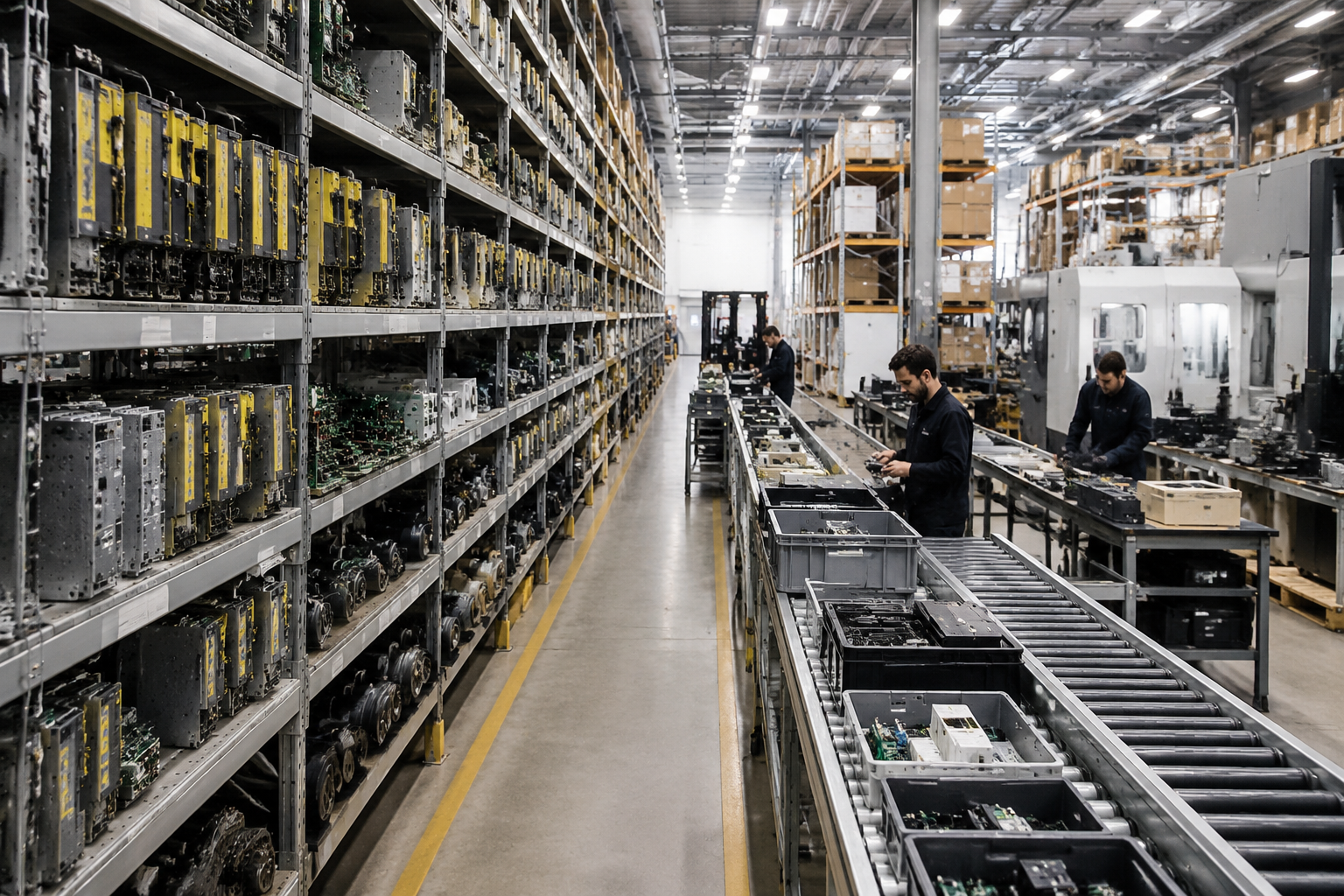
Why Siemens 6FC Series Boards Matter in Industrial Control
The Siemens 6FC series comprises some of the most trusted NCU boards in the industry. These boards are designed for robust performance in demanding environments. They are known for their:
- Compatibility with Siemens Sinumerik systems, a popular choice for precision machining.
- Longevity and durability in heavy-duty applications.
- Consistency and high-quality performance across various machine types.
- Seamless integration with Siemens’ ecosystem of automation products.
Common Pain Points When Choosing or Replacing an NCU Board
Choosing the right Siemens NCU board, especially between models like 6FC5371-0AA30-0AA1 and 6FC5371-0AA30-0AB0, can be tricky. Several challenges often arise:
- Compatibility issues with existing hardware or software.
- Concerns about performance differences affecting productivity.
- Uncertainty over future-proofing for upgrades or automation trends.
- Difficulty in understanding specifications and firmware support.
- Managing costs, especially for older versus newer models.
Understanding these common pain points helps in making an informed decision. The next sections will break down the specifications and features to clarify these differences further.
Detailed Specifications Comparison
When choosing between the Siemens 6FC5371-0AA30-0AA1 and 6FC5371-0AA30-0AB0 NCU boards, understanding their specifications is key. These boards are central to CNC control systems, so their processor speed, memory, I/O, and power requirements directly impact performance and compatibility.
Processor Speed and Performance
| Model | Processor Speed | Response Time | Error Handling |
|---|---|---|---|
| 6FC5371-0AA30-0AA1 | Slightly lower | Moderate | Basic error management |
| 6FC5371-0AA30-0AB0 | Slightly higher | Faster | Enhanced error handling |
The 0AB0 version typically features a faster processor, translating into quicker response times and better handling of errors during high-demand machining.
Memory and I/O Capabilities
| Specification | 6FC5371-0AA30-0AA1 | 6FC5371-0AA30-0AB0 |
|---|---|---|
| RAM | Standard (e.g., 256MB) | Slightly increased (e.g., 512MB) |
| Flash Storage | Same | Same or improved |
| I/O ports | Basic I/O | Additional or upgraded ports |
The 0AB0 board often offers better memory and I/O capacities, which are crucial for complex automation setups.
Power Requirements and Physical Specs
| Specification | 6FC5371-0AA30-0AA1 | 6FC5371-0AA30-0AB0 |
|---|---|---|
| Power Supply | Standard | Slightly higher tolerances |
| Physical Design | Compact | Slightly more durable or streamlined |
| Heat Dissipation | Standard | Improved for longer operation |
These differences can influence retrofit projects, especially if upgrading existing machinery.
Compatibility with Sinumerik and Hardware
Both boards are designed to seamlessly integrate with Siemens Sinumerik systems and a broad range of CNC hardware. However, the 0AB0 version’s improved firmware and hardware support may better future-proof your setup, especially if you’re planning to upgrade or expand your automation system.
Retrofit & Integration
- If your current system uses the 0AA1 version, upgrading to 0AB0 can boost performance.
- Verify compatibility with your existing Sinumerik controllers—Siemens Sinumerik systems often dictate the choice.
- Consider retrofit complexity—sometimes slightly newer boards like the 0AB0 simplify integration thanks to enhanced features.
Choosing the right NCU board isn’t just about specs but also about aligning with your operational needs. Next, we’ll look at the core differences and which option fits your CNC or automation project best.
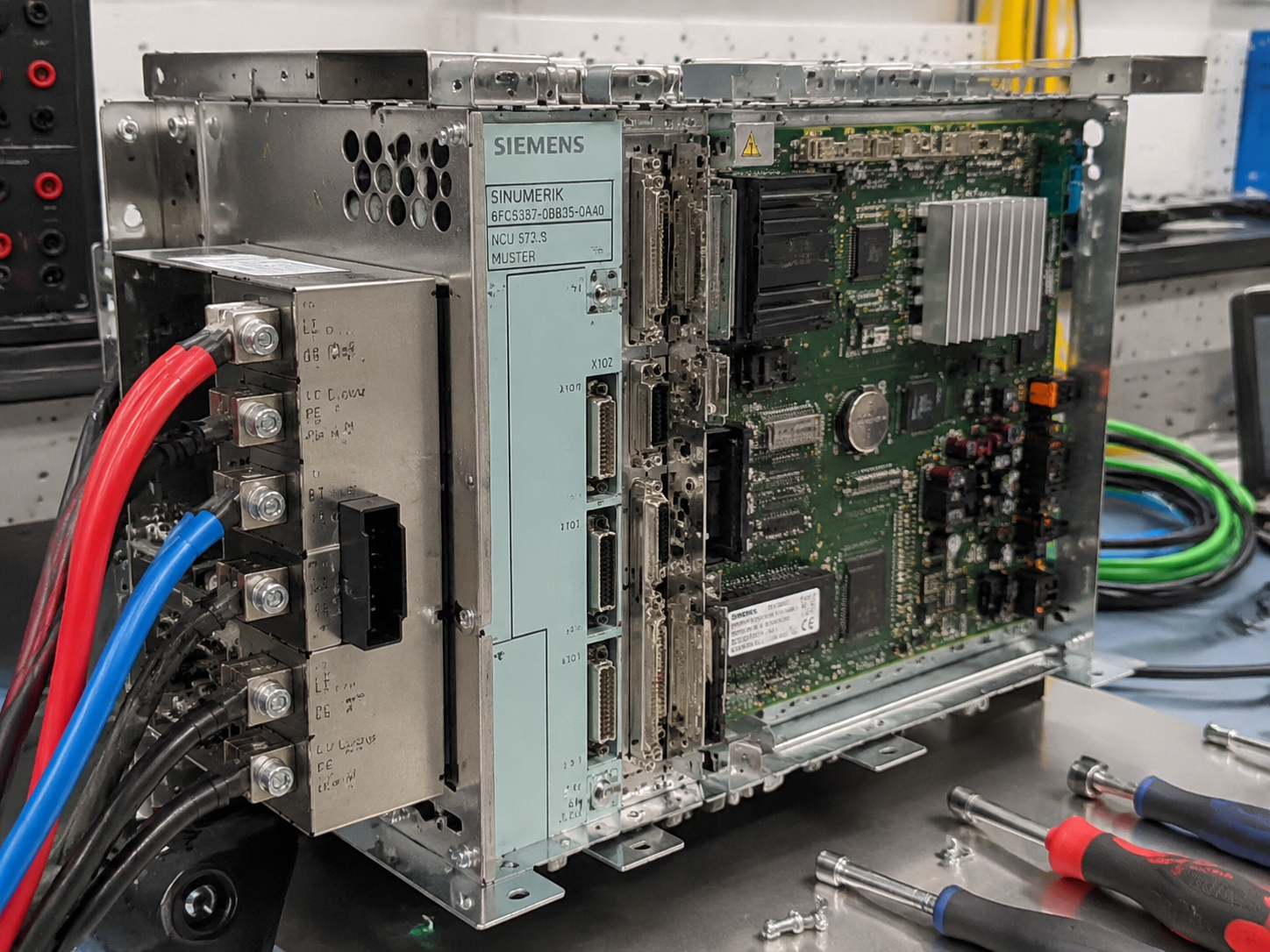
Key Differences and Similarities
When comparing the Siemens 6FC5371-0AA30-0AA1 vs 6FC5371-0AA30-0AB0, understanding their hardware, software, and design features is crucial. Both are part of the Siemens NCU (Numerical Control Unit) series, used widely in CNC and automation systems, but they do have some distinct points to consider.
Hardware and Functional Differences
| Feature | 6FC5371-0AA30-0AA1 | 6FC5371-0AA30-0AB0 |
|---|---|---|
| Processor Speed | Slightly slower | Faster, improved response |
| Memory | Standard | Increased for better multitasking |
| I/O Options | Basic I/O | Expanded I/O capabilities |
| Power Requirements | Standard | Slightly optimized for energy efficiency |
While both boards support core CNC functions, the 6FC5371-0AA30-0AB0 offers improved responsiveness, making it better suited for complex or high-speed machining tasks. The hardware upgrades translate into more precise control in demanding manufacturing environments.
Firmware and Software Support
Both versions run on Siemens firmware compatible with Sinumerik systems. However, firmware updates for the 0AB0 version typically provide enhanced error handling and system stability. It’s good to verify software support compatibility when considering upgrades or retrofits.
Design, Heat Dissipation, and Durability
- Design: Both boards are built with Siemens’ reputation for robust industrial design.
- Heat Dissipation: The 0AB0 version features improved heat sinks and thermal management, helping prolong life during continuous operation.
- Durability: Both boards meet high industrial standards, but the 0AB0’s enhanced thermal design offers better durability in tough conditions.
Shared Siemens Quality and Ecosystem Compatibility
Siemens ensures high quality across its NCU series, and both boards are compatible with the broader Siemens Sinumerik ecosystem. This includes seamless integration with Siemens drives, motors, and control systems, simplifying system upgrades and maintenance.
Real-world Impact in CNC and Automation Use
Choosing between these boards impacts machine performance and reliability:
- The 6FC5371-0AA30-0AA1 suits simpler, less demanding applications.
- The 6FC5371-0AA30-0AB0 is preferable for high-precision, high-speed manufacturing, and automation setups requiring faster processing and better thermal stability.
In , while both boards share core features, the 0AB0 version offers improvements that can enhance overall performance, especially in demanding industrial environments. For more on selection criteria, check out our CNC system parts.
Pros, Cons, and Cost Analysis
When comparing the Siemens 6FC5371-0AA30-0AA1 and 6FC5371-0AA30-0AB0 NCU boards, understanding their pros and cons helps you decide which fits your needs best. Both are high-quality Siemens 6FC series boards, but they target slightly different applications and budgets.
Siemens 6FC5371-0AA30-0AA1
Pros:
- Generally offers faster response times, making it suitable for high-precision CNC applications.
- Proven reliability from Siemens’ ecosystem, ensuring long-term durability.
- Compatible with a wide range of Sinumerik hardware, which simplifies integration.
Cons:
- Slightly higher price point, which might not fit tight budgets.
- Might be overkill for basic automation tasks, where simpler controllers could suffice.
Siemens 6FC5371-0AA30-0AB0
Pros:
- Slightly more cost-effective, making it attractive for smaller manufacturers or retrofits on a budget.
- Good performance that aligns well with mid-range CNC systems.
- Maintains Siemens’s high standards, ensuring dependable operation.
Cons:
- Might have slightly reduced specs compared to the 0AA1 version, such as response time or memory capacity.
- Limited upgrade potential if high performance is needed later on.
Pricing and Total Ownership Cost
The 0AA0 series (e.g., 0AB0) generally costs less upfront, but it’s important to factor in the total cost of ownership. Maintenance, energy efficiency, and potential downtime all add to the long-term costs. Siemens boards are built for durability, but choosing the right one depends on your application’s precision and throughput needs.
Maintenance, Energy Use, and ROI
Both boards are designed with energy efficiency and durability in mind, reducing operational costs over time. A more expensive but higher-performance board like the 0AA1 may bring faster cycle times, often translating to better ROI for high-volume manufacturing. In contrast, the 0AB0 might be better suited for simpler or less demanding setups with lower maintenance costs.
Budget Fit for Small and Large Manufacturers
Small manufacturers may lean toward the more economical 0AB0 version, which still offers reliable Siemens quality. Larger operations that prioritize speed and precision will likely find the 0AA1 a better investment, ensuring their CNC systems are top-tier and future-proof.
In , both boards have their strengths and are suitable for different operational needs. Your choice should balance your budget with the required performance levels, always keeping in mind the long-term benefits of Siemens’s legacy of quality and support.
Applications and Use Cases for Siemens NCU Boards
Best Uses for the 6FC5371-0AA30-0AA1
The Siemens 6FC5371-0AA30-0AA1 NCU board is ideal for high-precision CNC machines and complex automation setups. It’s well-suited for applications requiring reliable control for multi-axis machining centers, robotics, and advanced manufacturing lines. When performance, response time, and stability matter most—especially in demanding environments—it shines. You’ll often find this board in established industrial operations where long-term reliability and consistent output are critical. For more about choosing the right CNC upgrade, check out how to select a CNC control system.
Best Uses for the 6FC5371-0AA30-0AB0
The 6FC5371-0AA30-0AB0 NCU board is geared towards modern manufacturing needs—particularly those aiming for seamless integration with digital tools and IoT systems. It’s a good fit for retrofit projects where older hardware needs an upgrade to support smarter automation, or in machinery that benefits from enhanced processing capabilities. Its compatibility with Siemens Sinumerik systems makes it suitable for machine tools
Recommendations and Decision Guide
Choosing between the Siemens 6FC5371-0AA30-0AA1 and 6FC5371-0AA30-0AB0 NCU boards depends on your specific budget, performance needs, and application type. Here’s a quick guide to help you decide which one fits best.
How to Choose Based on Budget and Performance Needs
- Budget-conscious buyers may lean toward the 6FC5371-0AA30-0AA1, as it generally offers a lower initial cost.
- For high-performance or more complex control tasks, the 6FC5371-0AA30-0AB0 tends to provide updated firmware support, better response times, and improved error handling.
- It’s essential to assess whether your CNC system or automation line demands the latest features, or if a more basic setup will do.
When to Pick the Siemens 6FC5371-0AA30-0AA1
- When your existing system is compatible with older firmware versions.
- For machines that handle standard machining operations with moderate complexity.
- If cost savings are a priority, and you don’t expect to upgrade hardware frequently.
- For retrofit projects where compatibility with legacy equipment is critical.
When to Pick the Siemens 6FC5371-0AA30-0AB0
- When you need latest firmware and software support for better performance.
- For complex manufacturing setups that require faster response times and more reliable error handling.
- If your CNC system is future-proofing for IoT and smart automation, as this model typically aligns better with upcoming Siemens solutions.
- For easy integration with newer Sinumerik systems and broader Siemens automation ecosystem.
Decision Matrix and Alternative Options
| Criteria | 6FC5371-0AA30-0AA1 | 6FC5371-0AA30-0AB0 |
|---|---|---|
| Cost | Lower | Slightly higher |
| Firmware support | Older | Updated/Latest |
| Performance | Standard | Enhanced |
| Compatibility | Older systems | Future-proof, newer systems |
Remember, Siemens also offers other control options and NCU boards that can suit specific needs. Check if your application requires more advanced features or if a simple upgrade of the 6FC series is enough. For detailed hardware comparisons, reviewing specifications and consulting with a Siemens expert can make your decision easier.
If you’re interested in exploring Siemens system upgrades further, you might find this Siemens S7-1200 digital output module helpful for expanding automation capabilities.