

Mitsubishi MR-J3-40A vs MR-J4-40A Comparison
Model Basics and Power Rating
The Mitsubishi MR-J3-40A and MR-J4-40A are both high-performance servo drives used widely in industrial automation. The MR-J3-40A delivers up to 3.0 kW (4 HP) power, suitable for medium-duty applications, while the MR-J4-40A offers similar power but with enhanced features. Both models are designed to ensure precise control, reliability, and efficiency in various manufacturing environments.
| Feature | MR-J3-40A | MR-J4-40A |
|---|---|---|
| Power Rating | 3.0 kW (4 HP) | 3.0 kW (4 HP) |
| Max Voltage | 200-240 VAC | 200-240 VAC |
| Communication | SSCNET III, Ethernet/IP | SSCNET III, Ethernet/IP, SafetyNET III |
| Control Mode | Position, Speed, Torque | Position, Speed, Torque, Advanced control options |
| Size & Form | Compact, easy to install | Slightly advanced, more flexible |
Main Uses in Industrial Automation
- MR-J3-40A: Common in CNC machines, robotic arms, and basic automation systems needing reliable servo control.
- MR-J4-40A: Preferred in complex automation setups, including robotics, high-speed manufacturing, and systems demanding more precise control and advanced safety features.
Why This Comparison Matters
Choosing between the MR-J3-40A and MR-J4-40A is critical for repair or upgrade decisions. Upgrading may future-proof your system and improve performance, but it can be costly. Repairing older models can save money but may come with concerns about reliability and compatibility. Understanding these differences helps you make informed, practical decisions tailored to your specific needs.
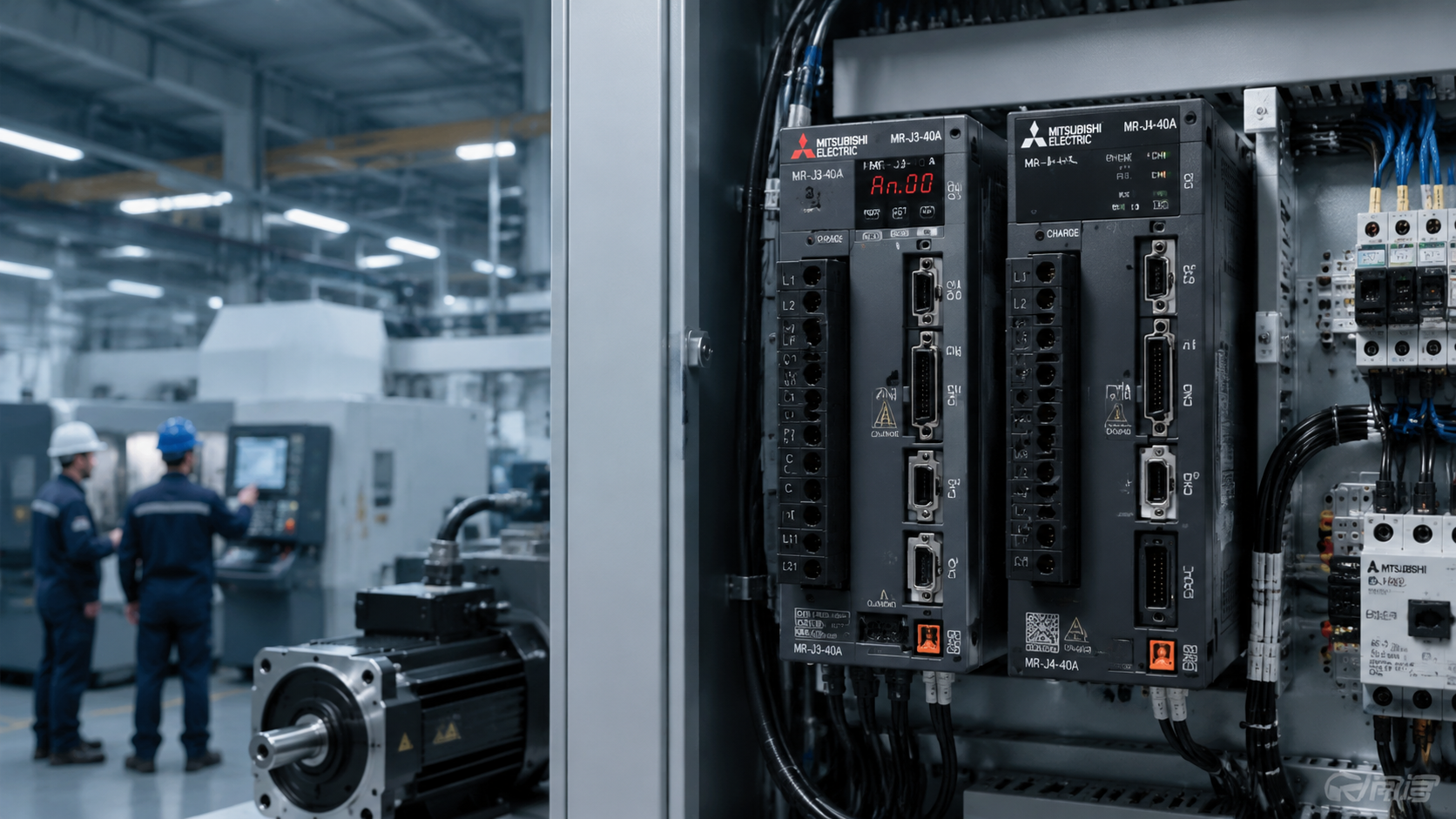
MR-J3-40A Overview
The Mitsubishi MR-J3-40A is a popular servo drive used widely in industrial automation. It offers a reliable way to control motors for CNC machines, robotics, and other precision systems. This model is known for its straightforward setup and good performance for mid-range applications.
Core Features and Specs
The MR-J3-40A provides up to 3.1 amps of continuous output current, making it suitable for small to medium motors. It supports multiple control modes, including position, speed, and torque control, giving flexibility in various automation tasks. One of its standout features is its built-in safe torque off (STO) capability, which adds safety for maintenance and operation.
This servo drive is compact and designed for easy integration with Mitsubishi’s broader automation ecosystem. It features a digital control interface, allowing precise tuning and quick adjustments. For more on digital servo drives, check out benefits of using digital AC servo drives in industrial automation.
Common Applications
The MR-J3-40A is especially popular in CNC machines, packaging equipment, and robotic systems in manufacturing plants. Its reliability and accurate control make it a good choice for tasks needing consistent precision. These drives are also used in packaging, assembly lines, and small machine tools.
Typical Age and Lifecycle Concerns
Given its release a few years ago, many MR-J3-40A drives are now approaching or have surpassed the typical 5-7 year lifespan. Like all servo drives, their long-term performance depends on proper maintenance and operating conditions.
What Usually Goes Wrong with Older MR-J3 Drives
Over time, a few common issues tend to crop up with older MR-J3-40A drives:
- Capacitor wear and failure: Electrolytic capacitors inside may leak or short-circuit after years of use.
- Power module degradation: Components handling power may overheat or wear out, leading to output issues.
- Sensor or encoder problems: The controllers depend on feedback from encoders; these can become misaligned or fail.
- Cooling problems: Dust and dirt build-up can cause overheating, especially in harsh environments.
If you’re facing these issues, sometimes a repair can fix the drive, but other times, upgrading might be the best move to avoid repeated failures. For troubleshooting tips, see MR-J3-40A troubleshooting.
MR-J4-40A Overview
The Mitsubishi MR-J4-40A servo drive is the next generation in Mitsubishi’s popular line of industrial motor controllers. It features significant core upgrades designed for demanding automation tasks, making it a preferred choice for companies looking to modernize their systems.
Core features and specs
The MR-J4-40A is built with a maximum output of 40A, supporting high-performance servo control. It offers advanced tuning options, increased response speed, and improved dynamic performance, making it ideal for applications requiring precise movement. Notable features include enhanced safety functions like onboard Safe Torque Off (STO), better noise filtering, and integrated energy-saving capabilities. The drive also supports multiple communication protocols such as Ethernet/IP, CC-Link IE, and MELSEC iQ-R, ensuring seamless integration with the latest automation networks.
Performance improvements over MR-J3
Compared to the older MR-J3 model, the MR-J4-40A provides faster response times, better control accuracy, and more stable operation under varying loads. It features a higher control bandwidth, improving the drive’s ability to handle complex motion profiles smoothly. The new firmware and hardware upgrades help reduce jitter and improve positional accuracy, which is critical in high-precision tasks like CNC machining or robotics.
Communication and control upgrades
One of the biggest upgrades in the MR-J4-40A is its enhanced communication capabilities. It supports faster data transfer and multiple protocols, making it easier to connect with a variety of PLCs and industrial networks. With improved control algorithms, it offers finer tuning parameters, which helps achieve better performance and setup efficiency. These features make the MR-J4 more future-proof and versatile for different automation environments.
Why newer systems prefer MR-J4
Modern manufacturing lines favor the MR-J4-40A because it offers better energy efficiency, more reliable operation, and easier integration with current automation standards. Its advanced features support Industry 4.0 initiatives, including remote diagnostics and predictive maintenance, which weren’t as developed in the MR-J3 series. For companies upgrading their systems, moving to MR-J4 ensures compatibility with evolving technology while boosting productivity and reducing downtime.
MR-J3-40A vs MR-J4-40A Differences
When comparing the Mitsubishi MR-J3-40A and MR-J4-40A servo drives, the key differences come down to performance, features, and system compatibility.
Performance and Response Speed
| Feature | MR-J3-40A | MR-J4-40A |
|---|---|---|
| Response speed | Good, but slower | Faster, more reactive |
| Positioning accuracy | Adequate for many tasks | Higher precision with advanced tuning |
The MR-J4-40A is designed for quicker response times, making it better suited for demanding automation or CNC applications. Its faster response helps improve cycle times and overall system performance.
Accuracy and Tuning
| Feature | MR-J3-40A | MR-J4-40A |
|---|---|---|
| Tuning capabilities | Basic | Advanced auto-tuning |
| Positioning | Sufficient for most uses | Greater accuracy, less setup time |
The newer MR-J4 offers advanced tuning features, which allow for more precise motor control with less effort, especially helpful for complex automation setups.
Energy Efficiency
| Feature | MR-J3-40A | MR-J4-40A |
|---|---|---|
| Power consumption | Standard | Improved energy efficiency |
| Eco-friendly features | Limited | Enhanced power-saving modes |
The MR-J4’s energy-efficient design helps reduce operational costs and supports greener manufacturing efforts, which is increasingly important in U.S. factories.
Safety and Integration
| Feature | MR-J3-40A | MR-J4-40A |
|---|---|---|
| Built-in safety features | Basic | Advanced safety functions, better seamless integration |
| Communication protocols | Limited options | Supports updated protocols like CC-Link IE TSN |
The MR-J4 enhances safety and integration, making it easier to incorporate into modern, interconnected automation systems.
Compatibility with Motors and Systems
| Feature | MR-J3-40A | MR-J4-40A |
|---|---|---|
| Motor compatibility | Good, but limited | Broader range, easier retrofits |
| System integration | More manual setup | Simplified with newer interfaces |
Choosing between the two often hinges on how easily the drive can match existing motors and control systems. MR-J4’s broader compatibility and easier retrofit options make it attractive for upgrades.
In , the MR-J4-40A provides faster response, higher accuracy, and better energy efficiency, making it the smarter choice if you’re upgrading or starting fresh. However, if your current system works well and budget is tight, the MR-J3-40A could still be a viable option for now.
Should You Upgrade or Repair?
Deciding whether to repair your Mitsubishi MR-J3-40A or upgrade to the MR-J4-40A depends on several factors. First, consider when repair makes more sense—if the drive is relatively new, with minimal signs of wear, fixing it might be the cost-effective choice, especially for short-term needs. However, if your current drive is showing age-related problems or frequent failures, upgrading to the newer MR-J4-40A can provide more stability and better performance.
How equipment age impacts this decision is also critical. Older servo drives tend to have higher repair costs and parts availability issues, making upgrades a more reliable long-term solution. Additionally, changing production demands—such as increased precision, faster response times, or higher energy efficiency—often justify upgrading to the latest model like the MR-J4-40A, which offers significant improvements over the MR-J3 for industrial automation systems.
In essence, if your current setup no longer meets your needs or is approaching the end of its life cycle, upgrading can improve your operational stability and efficiency. Conversely, for minor faults or short-term fixes, repair might be enough, especially if you want to keep costs down while delaying a full upgrade.
Cost Analysis of Repair vs. Upgrade for Mitsubishi MR-J3-40A vs MR-J4-40A
When deciding whether to repair your existing Mitsubishi MR-J3-40A or upgrade to the newer MR-J4-40A, understanding the cost factors is key. The upfront costs aren’t the only consideration—long-term expenses and potential hidden fees also play a big role.
Repair cost factors are usually lower initially, especially if the drive just needs a small part, troubleshooting, or routine maintenance. However, if failures keep recurring, the cost of multiple repairs can add up quickly, which may make repair less economical over time. Parts availability for older models like the MR-J3-40A can sometimes be tricky, leading to delays and increased expenses.
Upgrade cost factors are higher upfront, given the new system’s price and any system integration work. But newer drives like the MR-J4-40A tend to have better energy efficiency and longer lifespan, which helps save on operational costs in the long run. The cost of wiring changes and system adjustments—especially if you’re retrofitting old equipment—should also be factored in, along with potential motor and encoder compatibility issues. For detailed info on motor control systems, check this industrial motor control systems.
Downtime and labor impact can be significant. Repairing an older drive might mean shorter installation times if parts are readily available, but it can also result in repeated shutdowns if failures occur again quickly. Upgrading with a newer model might take more time initially but can reduce unexpected downtime later.
Long-term ROI comparison favors the upgrade if your production relies heavily on uptime and efficiency. Though the initial investment is higher, the improved stability, energy savings, and better control of the MR-J4-40A make it more cost-effective over the product lifecycle. Watch for hidden costs to watch, such as system incompatibility, additional wiring, or required control system upgrades, which can surprise you if not planned carefully.
In , weigh your current repair expenses with potential long-term benefits and risks. Sometimes a quick fix makes sense, but for equipment critical to high-demand lines, investing in an upgrade could save more money and hassle down the line.

Pros and Cons of Repairing MR-J3-40A
Repairing your Mitsubishi MR-J3-40A servo drive can seem like a quick fix, especially if you’re working with a tight budget. The initial cost is usually lower, and repairs can often be done faster than a full upgrade, making it appealing for short-term needs. Plus, if the drive is relatively new or has minor issues, a repair might keep things running smoothly without much fuss.
However, there are important drawbacks to consider. Repaired MR-J3-40A drives may be more prone to repeat failures, especially if underlying issues aren’t fully addressed. Parts for older models can also become harder to find, which could lead to delays or incomplete repairs. Additionally, while repairs can extend the drive’s life temporarily, they might not be a long-term solution as newer systems, like the MR-J4-40A, offer better performance, efficiency, and safety features.
If you’re looking to keep your equipment reliable without frequent fixes, or your automation setup is evolving, it might be worth weighing repair costs against the benefits of upgrading to a newer servo drive system.
Pros and Cons of Upgrading to MR-J4-40A
Upgrading from the MR-J3-40A to the MR-J4-40A brings clear advantages in performance and system stability. The MR-J4 offers faster response times, improved accuracy for precise control, and a more energy-efficient design, making your automation setup more future-proof. It’s an especially smart move if you’re working with high-speed CNC machines or robotics that demand quick, reliable servo performance.
However, these benefits come with a higher upfront cost, which can be a concern for smaller plants or short-term projects. The upgrade isn’t just about the drive — wiring, parameter settings, and motor compatibility may need adjustment, so retrofitting older systems might require additional planning. While the improved energy efficiency and control features are compelling, consider your budget and long-term plans before deciding.
In short, if your equipment is aging or if your production needs are increasing, the MR-J4-40A can boost your productivity and reduce downtime. But for simpler setups or tight budgets, repairing the existing MR-J3 might be more cost-effective, especially if you don’t need the latest features right now.
Compatibility and Retrofit Issues
When upgrading from an MR-J3-40A to an MR-J4-40A, compatibility is a key concern. You may need to make wiring and parameter adjustments to ensure a smooth transition. The newer MR-J4 system often requires different connections or pinouts compared to the older MR-J3 drives, which can mean redoing wiring diagrams or modifying existing control panels.
Matching motors and encoders with the new drive is also critical. The MR-J4 offers improved control and support for more advanced motors, but older motors or encoders may not meet the new drive’s specifications. In such cases, compatibility issues can cause performance drops or even system failures.
System integration checks are a must—especially if you’re retrofitting older machines. You need to verify that the new drive communicates properly with your existing PLCs or CNC controllers. Compatibility problems with communication protocols or control signals are common when upgrading.
Retrofitting older machinery with the MR-J4 involves more than just replacing the drive. It’s essential to review wiring schematics, control parameters, and motor specifications to avoid issues. Sometimes, the newer drive’s advanced features can be less compatible with legacy equipment, so thorough planning and testing are advised.
If you’re unsure about whether your current setup can handle an MR-J4 upgrade without complications, consulting the drive’s specifications or talking to a professional can save time and avoid unexpected problems. For more insights into system integration, check out FANUC CNC controllers settings for switching.
Real-World Decision Guide
Knowing whether to repair your Mitsubishi MR-J3-40A or upgrade to the MR-J4-40A can be tricky. Here’s a quick guide based on real-world situations.
Signs You Should Repair Your Existing Drive
- The drive is relatively new, typically under 5 years old.
- You’re experiencing minor issues like occasional errors or slow response times.
- Repair costs are low, and spare parts are readily available.
- Your current setup still meets your production needs without significant upgrades.
- It’s a short-term fix while planning a future upgrade.
Signs You Should Upgrade to MR-J4-40A
- The drive shows frequent failures or error patterns that indicate aging components.
- You need better performance, faster response times, or more energy efficiency.
- Your system requires better safety features or improved communication protocols.
- Your production demands are increasing, and the older drive can’t keep pace.
- You want to future-proof your automation setup and avoid frequent repairs.
Best Choice for CNC Machines
For CNC machines, precision and stability are key. Upgrading to the MR-J4-40A often makes sense if you want higher accuracy, faster tuning, and energy-efficient operation. It offers smoother motor control and more reliable long-term performance, essential for high-precision manufacturing.
Best Choice for Robotics and Automation Lines
In robotics and automation lines, reliability and advanced communication are critical. The MR-J4-40A provides better control response and integrates more seamlessly with modern industrial networks. If your equipment is aging or you’re expanding your automation, upgrading reduces downtime and boosts productivity.
How to Reduce Risks Before Deciding
- Conduct a thorough diagnostic on your current drive—look for signs of wear or recurring issues.
- Evaluate your production schedule and downtime costs—sometimes a repair can save money short-term.
- Consult with a professional for a full system assessment—this helps you understand compatibility or retrofit risks.
- Check the availability of parts for your existing drive, especially if considering repair.
- Review your future needs—long-term planning can favor upgrading if your system demands grow.
Deciding whether to repair or upgrade isn’t always straightforward, but following these tips helps make the right call for your specific situation.
Troubleshooting and Maintenance Tips
Basic MR-J3-40A Troubleshooting
Troubleshooting a Mitsubishi MR-J3-40A servo drive starts with checking common issues like power supply problems, wiring faults, or overheating. Ensure the drive’s LED indicators display normal status—if not, consult the MR-J3-40A troubleshooting guide and verify connections. Sometimes, simple things like loose cables or dirty contacts can cause unexpected stops or inaccurate responses. Always double-check the wiring and parameters before moving on to more advanced diagnostics.
Preventive Maintenance Steps
Regular preventive maintenance can significantly extend the lifespan of your Mitsubishi servo drive. Keep filters clean, check cooling fans, and verify ventilation pathways to avoid overheating. Periodically inspect the drive for dust or debris build-up, which can cause internal faults. Updating firmware when available can also prevent compatibility issues in the future. For tips on maintaining other equipment like CNC machines, this industrial automation upgrade article offers helpful insights.
How to Reduce Servo Drive Failures
Reducing servo drive failures involves proper installation and usage practices:
- Avoid power surges with adequate grounding and surge protectors.
- Set the correct parameters for your specific motor and application to prevent overloads.
- Conduct regular electrical inspections to identify early signs of component wear.
- Use quality wiring and connectors to prevent intermittent faults.
When a Repair Shop Can Help
If basic troubleshooting doesn’t resolve the issues, a professional repair shop can diagnose deeper problems. They can repair or replace internal components that are no longer commercially available, which is especially useful for older models. Remember, if your system shows repeated faults or slow response times, professional help can prevent costly downtime. For those dealing with complex systems like robotics or CNC machinery, expert diagnostics can ensure your industrial motor control systems stay reliable.
How to Extend Drive Life
Extending the life of your Mitsubishi servo drive involves preventive care and smart operation:
- Schedule regular inspections and maintenance routines.
- Keep firmware updated to improve stability.
- Overspec your setup slightly—using a slightly higher rated drive can provide extra headroom.
- Minimize abrupt startups and stops which stress internal components.
- Train operators on proper handling and troubleshooting to reduce accidental damage.
Following these simple tips can keep your Mitsubishi MR-J3-40A or even the newer MR-J4-40A running smoothly, avoiding costly repairs and downtime. Proper care is the key to maximizing the lifespan of your servo drives and maintaining high productivity.
Expert Recommendation
When deciding whether to repair your Mitsubishi MR-J3-40A drive or upgrade to the MR-J4-40A, getting a professional assessment can save you money and headaches. Experts can help evaluate your current system’s condition, compatibility issues, and future needs, ensuring you make the best choice.
How to Evaluate Your Setup
- Assess your current equipment age and performance: Older drives like the MR-J3-40A may be nearing the end of their lifecycle. Check for signs of wear, inconsistent operation, or frequent failures.
- Review your automation goals: Are you aiming for increased speed, better precision, or energy savings? The MR-J4-40A offers performance upgrades that support these advancements.
- Compatibility consideration: Ensure your existing motors, encoders, and control systems match the newer drive’s specifications. Sometimes, retrofitting older systems require significant wiring or parameter adjustments.
- Evaluate downtime impact: Will repairs cause long production stops, or can upgrading be done quickly? Sometimes, investing in an upgrade reduces long-term downtime and maintenance costs.
Questions to Ask Before Buying or Repairing
- Does my current drive still meet my performance needs?
- What’s the cost difference between repairing the MR-J3-40A and upgrading to the MR-J4-40A?
- Are my motors and control systems compatible with the newer drive, or will I need additional components?
- What is the expected lifespan of the repaired versus new drive?
- Can I expect energy efficiency gains with the MR-J4-40A?
How to Compare Total Cost of Ownership
- Break down initial repair or upgrade costs, including hardware, installation, and testing.
- Compare long-term savings from energy efficiency and reduced downtime.
- Factor in potential future upgrades or system expansions.
- Consider reliability—the MR-J4-40A’s improved stability might save money on repairs over time.
- Watch out for hidden costs like wiring updates, motor matching, or additional control system upgrades.
Why Professional Assessment Helps
Getting a qualified technician or integrator’s input ensures you avoid costly mistakes. They can identify hidden issues, confirm compatibility, and recommend the best solution tailored to your specific needs. This way, you’re not just compensating for outdated tech but future-proofing your system, especially in critical applications like CNC machines or robotics.
Overall, whether you choose to repair or upgrade, making an informed decision backed by expert advice ensures your investment improves productivity and system reliability long-term.