

What Is a FANUC Servo Amplifier A06B Series?
If you’re involved in CNC machining or industrial automation, you’ve likely heard of the FANUC Servo Amplifier A06B Series. But what exactly is it? Simply put, it’s a vital component that powers and controls servo motors in high-precision systems. These amplifiers serve as the “brain” behind seamless motion control, translating digital commands into the electrical signals needed to drive motors accurately.
Why the A06B Series Matters in CNC and Industrial Automation
The FANUC A06B Series has become a cornerstone in factories and automation setups across the U.S. and beyond. Why? Because it ensures precise, reliable motion control—critical for complex machining, robotics, and production lines. The series is known for its durability, compatibility, and ability to handle demanding industrial environments.
How FANUC Servo Amplifiers Control Motion and Precision
FANUC servo amplifiers like those in the A06B Series precisely regulate the electrical power sent to servo motors. They monitor feedback signals—such as position and speed—to make fine adjustments in real-time. This control loop guarantees accuracy, smooth operation, and repeatability, which are essential for machining tight tolerances or robotic movements.
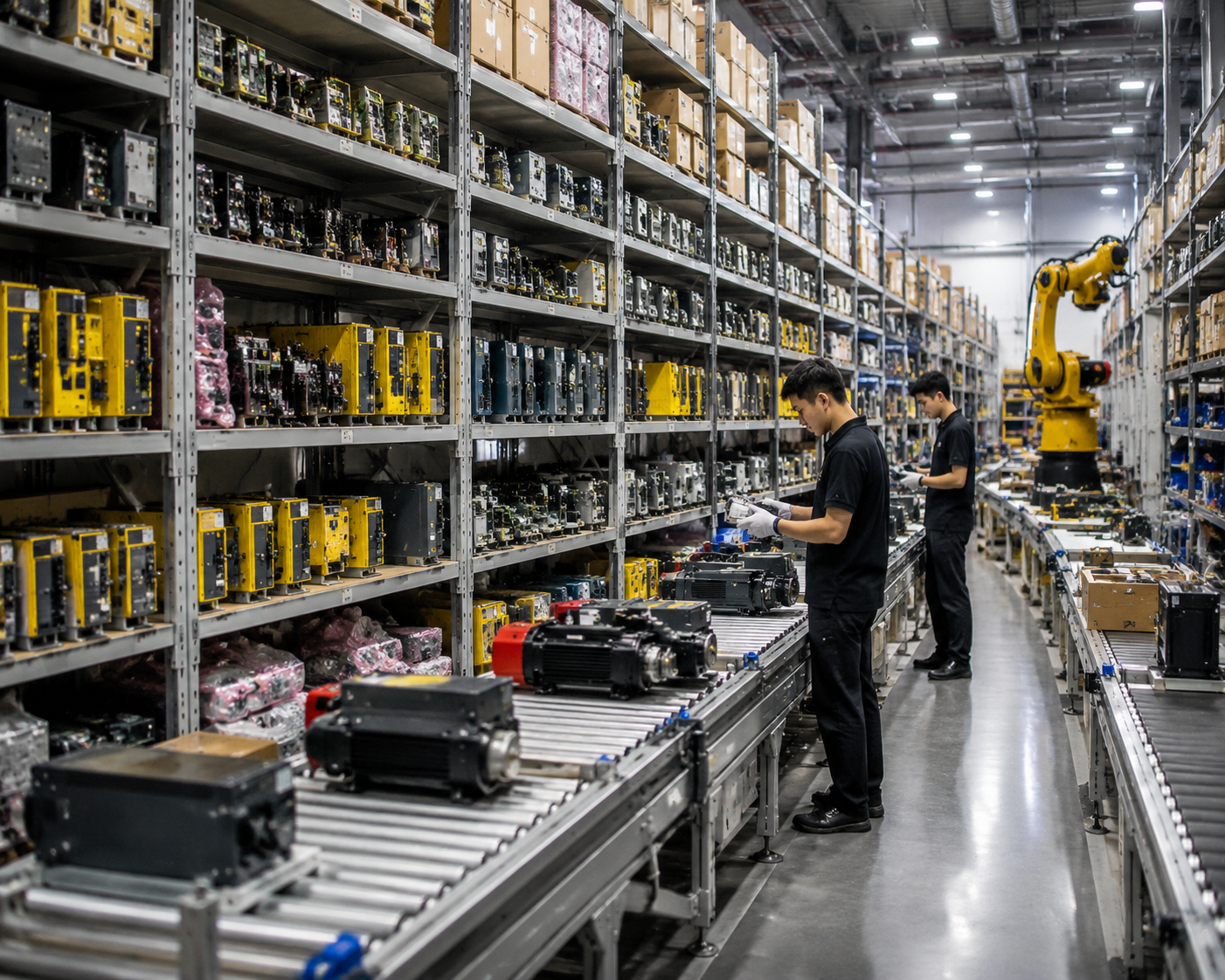
Common Applications in Machining, Robotics, and Factory Systems
You’ll find the FANUC A06B series powering:
- CNC machines for milling, turning, and drilling
- Robotic arms used in assembly lines
- Automated conveyor systems
- Spindle systems in high-speed machining
- Factory automation where precise motion control is critical
This versatility makes the A06B Series a go-to choice for manufacturers aiming for efficiency, precision, and reduced downtime.
How to Read FANUC A06B Model Numbers
Understanding how FANUC servo amplifier A06B series model numbers work can save you time and help ensure you order the right part. Each model number is a combination of codes that tell you important details like voltage, power, interface options, and special features.
What Each Code Segment Means
A typical FANUC A06B model number might look like A06B-6058-H003. Here’s how to decode it:
- A06B: This indicates the series, so you know it belongs to the FANUC A06B series of servo amplifiers.
- 6058: The main model number, which specifies the power level, size, and core features.
- H003: Options or special features — like interface type, communication protocol, or additional capabilities.
Voltage, Power, Interface, and Option Code Breakdown
- Voltage & Power: Usually indicated in the middle digits (like “6058”)—these tell you the AC voltage rating and the output power range.
- Interface: The suffix or optional codes often specify whether the amplifier supports certain motor or control interface types, such as analog or digital inputs.
- Options & Features: Additional suffixes (like “H003”) denote optional features like built-in brakes, special cooling, or communication protocols.
How Model Numbers Help Match the Right Part
Knowing how to read these model numbers helps you quickly match the right FANUC servo amplifier A06B to your CNC machine or automation setup. Whether upgrading or replacing, you want a model that fits your motor’s specifications and controller compatibility. By understanding the model number structure, you can avoid ordering mismatched units, reducing downtime and saving costs.
For detailed information on decoding model numbers, you might find our FANUC A06B manual helpful.
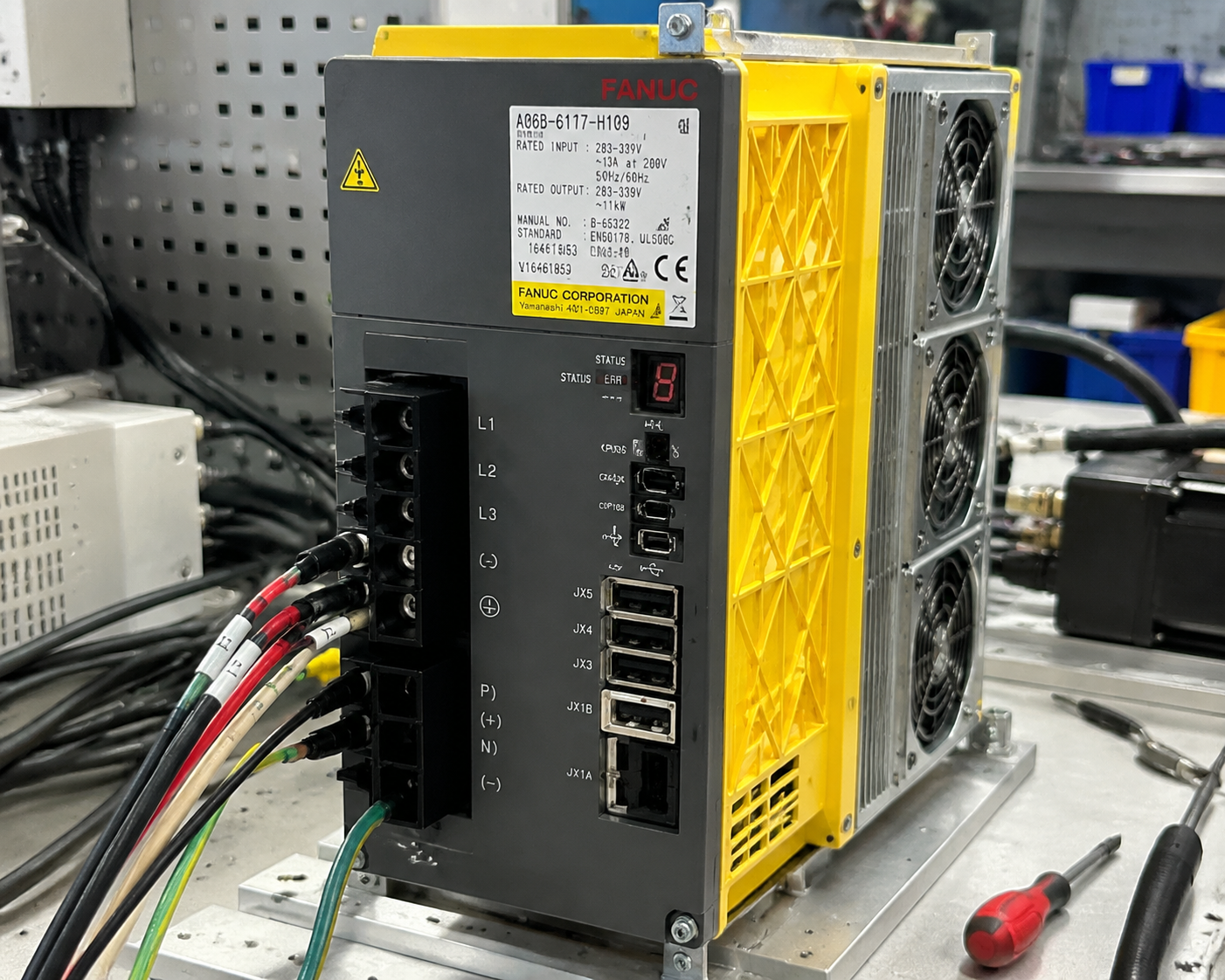
A06B Series Main Model Types
The FANUC A06B series offers several key model types designed to meet different automation needs. Understanding these types helps in selecting the right servo amplifier for your CNC or industrial automation system.
Single-Axis Servo Amplifiers
These are the most common A06B models, designed to control one servo motor at a time. They’re ideal for machines with straightforward motion requirements, like simple CNC lathes or milling machines. Single-axis amplifiers are usually compact, cost-effective, and easy to integrate.
Dual-Axis Servo Amplifiers
Dual-axis models can control two servo motors simultaneously within a single unit. These are perfect for applications where synchronized or coordinated motion is needed, like multi-axis machining centers or robotic arms. They help save space and simplify wiring.
Built-in Power Supply Units
Some A06B models come with integrated power supplies, reducing the need for separate power units. This setup simplifies wiring and can streamline installation, especially in smaller or more compact machine setups.
Alpha Series and Related Variants
The Alpha series, including some related A06B variants, focus on high performance, faster response times, and enhanced control features. They are often used in high-precision applications, including robotics and complex CNC systems.
Comparing Different Types
- Single-axis amplifiers are best for simple, dedicated tasks.
- Dual-axis models excel in coordinated motion and save space.
- Built-in power supply units are ideal when minimizing component count and reducing installation complexity.
- Alpha series A06B variants are suited for high-precision jobs that demand quick response and superior control.
Knowing these types helps you match the right model to your specific application, whether you’re upgrading existing systems or designing new automation solutions.
Key Specifications of FANUC A06B Servo Amplifiers
Understanding the key specifications of the FANUC A06B series full guide is essential when choosing the right servo amplifier for your CNC or automation system. Here’s a quick breakdown of the main specs:
| Specification | Details |
|---|---|
| Input Voltage | Typically ranges from 200V to 480V AC, depending on model. Check your system’s voltage to ensure compatibility. |
| Output Power Range | From small single-axis units around 100W to heavy-duty models with several kW of power. Some models are designed for specific motor sizes. |
| Current Rating | Usually ranges from 2A to over 30A, matching various servo motor requirements. This affects motor torque and responsiveness. |
| Motor Compatibility | Supports a wide range of FANUC servo motors, including AC and DC types. Make sure to match the motor’s specifications. |
| – For instance, some A06B units are optimized for high-precision or high-torque motors. | |
| Control Method & Feedback | Features advanced control algorithms, including vector control and servo position feedback support. This helps achieve precise motion control. |
| — | — |
| Size, Mounting, & Environment | Compact designs with standard mounting options. Most models can operate within typical shop environments, but check limits for temperature, dust, and vibration to avoid issues. |
If you’re upgrading or replacing, knowing these specs helps avoid mismatched parts. For example, if you’re working with a high-torque motor, confirm the current and power ratings match your motor’s needs. Sometimes, choosing the right model also means referring to the specifications of your CNC control and the operating environment.
Looking to match your FANUC A06B servo amplifier with compatible components? You might find this servo drive specifications helpful.
How to Identify the Right A06B Amplifier
Choosing the correct FANUC A06B series servo amplifier starts with understanding your machine’s needs and matching the right specifications. Here’s a quick guide:
- Match the amplifier to the servo motor: Ensure the A06B amplifier’s power output and current ratings are suitable for your servo motor. Different motors need different amplifiers, so double-check motor specifications like voltage, torque, and feedback type. For example, if your servo motor is part of a high-precision CNC setup, you need an A06B model that supports that level of control.
- Check controller compatibility: Verify that the A06B model works seamlessly with your FANUC CNC control system. Compatibility issues can cause programming or communication problems down the line. Refer to the FANUC A06B manual for detailed compatibility info or look for cross-reference guides.
- Confirm voltage and load requirements: Match the amplifier’s input voltage and output load with your power supply and machine requirements. Operating the wrong voltage can lead to overheating or failure. Be sure to review the specifications, especially if upgrading an existing system.
- Verify machine application and operating conditions: Consider the environment and working conditions—such as temperature, dust, vibration, and duty cycle. Some models are built to withstand harsher industrial environments, while others are designed for cleaner, controlled settings.
Matching these key factors helps you avoid mismatched parts, reduce downtime, and ensure your automation runs smoothly. For more tips on properly selecting and maintaining your FANUC servo components, check out our servo amplifier specifications.
A06B Model Number Examples Explained
Understanding how to decode A06B model numbers is key to choosing the right FANUC servo amplifier for your system. Let’s look at a typical example of an A06B code and break down what each part means.
For instance, consider the model number A06B-6058-H002. Each segment of this code provides specific info:
- Series (A06B-6058): This tells you the specific series and main specifications. In this case, “6058” indicates the power capacity and features tied to that series.
- Suffix (H): This often represents the hardware type or specifications, like installation options, cooling types, or special features.
- Option digits (H002): These are additional features or options, such as communication interfaces, optional accessories, or firmware versions.
When comparing models, make sure to check the series number to match your motor and controller. Pay attention to the suffix to see if it supports your installation environment. The option digits can help you identify added functionalities or accessories.
To avoid ordering the wrong unit, always verify these key details:
- Your motor’s voltage and power ratings.
- Compatibility with your existing CNC control or automation system.
- Whether the model’s features match your operational needs.
Properly decoding the model number saves time and avoids future headaches—plus, it ensures your FANUC A06B servo amplifier will fit perfectly into your setup. If you’re unsure, referencing the FANUC A06B manual can help clarify each segment of the model number.
FANUC A06B Series Compatibility Guide
When selecting a FANUC A06B series servo amplifier, compatibility is key. These amplifiers work with various FANUC CNC controls, but it’s important to double-check that your control system can communicate seamlessly with the amplifier. For example, some older FANUC CNC units might require specific firmware updates or interface modules to match newer A06B models properly.
Similarly, matching the right servo motor or spindle system is crucial for optimal performance. The A06B series supports a broad range of servo motors, but not all models are cross-compatible. When upgrading or replacing, always verify that the motor’s specifications and the amplifier’s control method align. This reduces issues like communication faults or mismatched power levels.
Matching old and new series can sometimes be tricky because FM series, such as A06B-6058, have specific compatibility limits. For instance, some earlier A06B models may not support the latest motor feedback devices or control options found in newer series.
Pro tip: Always consult the official FANUC A06B compatibility charts or consider cross-reference tools to ensure you’re choosing the right replacement part. In tough cases, talking to a reliable supplier or checking online forums like Ouke CNC Support can save you time and headache. Proper compatibility guarantees smoother operation and minimizes downtime.
Common FANUC A06B Problems
Dealing with FANUC A06B series servo amplifiers can sometimes be tricky, especially if you’re troubleshooting issues on the shop floor. Several common problems tend to crop up, and recognizing the alarm codes and error symptoms is key to fixing them quickly.
Alarm codes and error symptoms
FANUC A06B servo amplifiers typically communicate issues through alarm codes displayed on the CNC or control system. These alarms can relate to motor overloads, communication errors, or internal faults. For example, an alarm like 091, which often indicates a motor
Troubleshooting FANUC Servo Amplifiers
When your FANUC servo amplifier A06B series starts acting up, quick troubleshooting can save you time and money. Before jumping into replacement, do some basic checks to identify whether the problem is with the amplifier or the motor itself.
Quick Checks Before Replacement
Start by verifying power supply connections and ensuring wiring is secure. A loose or damaged cable can cause communication errors. Also, make sure the cooling fan and vents are clean—overheating is a common cause of faults. You can find detailed cooling tips in our servo drive maintenance guide.
How to Isolate Amplifier vs Motor Faults
To determine whether the issue lies with the amplifier or motor, try swapping in a known-good servo motor if available. If the fault follows the motor, the problem is likely with the motor itself. Conversely, if swapping the motor doesn’t help, the amplifier may be the cause. Using a multimeter to check the output signals and encoder feedback can also help pinpoint the fault more accurately.
Basic Inspection Steps
- Check for alarm codes: Fanuc controllers often display specific alarms for amplifier issues, which can direct you to the exact problem.
- Inspect wiring and connectors: Look for signs of wear, corrosion, or loose connections.
- Test power supply rails: Confirm the input voltage matches the specifications for your A06B model.
- Examine cooling components: Clean or replace fans if overheating is suspected.
When to Repair, Replace, or Send for Service
If the troubleshooting steps reveal internal damage—such as burned components or blown fuses—it’s often best to replace the amplifier. For complex issues or outdated units, professional repair or sending the unit for service might be the way to go. Regular preventive maintenance can also prevent many common faults, extending your amplifier’s lifespan. For guidance on maintenance, check out our servo amplifier tips.
Maintenance Tips for A06B Amplifiers
Keeping your FANUC A06B series servo amplifiers running smoothly means doing some simple, regular checks. Preventive maintenance can prevent costly breakdowns and extend the life of your amplifier. Here’s what you should focus on:
- Cooling & Fan Care: Make sure the cooling systems are clean and functioning properly. Dust buildup can lead to overheating, so regularly check and clean the fans and vents. Good airflow keeps your amplifier operating at optimal temperature and prevents sudden shutdowns.
- Dust and Environment Control: Keep the area around the amplifier free of dust, debris, and moisture. Dust accumulation inside the amplifier can cause overheating and electrical issues over time. Consider using filters or covers if your environment is dusty or humid.
- Connection & Terminal Check: Periodically inspect all wiring and terminal connections. Loose or corroded connections can cause communication errors or power issues. Tighten any loose screws and clean terminals as needed.
- Extend Amplifier Life: Implement routine inspections and follow manufacturer recommendations for component replacement. Confirm that the amplifier’s cooling fans, filters, and ventilation paths are clean and unobstructed. When in doubt, consulting the FANUC A06B manual can provide specific maintenance schedules for your particular model.
Regular upkeep not only prevents downtime but also keeps your CNC or industrial automation system performing reliably. If you’re unsure about certain checks, professional service can help you keep your FANUC servo amplifier in top shape.
2026 Updates and Selection Tips
In 2026, selecting the right FANUC servo amplifier A06B series requires staying current with the latest updates and trends. Users should pay attention to compatibility with newer CNC controls and the growing emphasis on energy efficiency. With newer models offering improved power management and smarter system integration, it’s a good idea to review the latest specifications and firmware updates.
Many companies are upgrading from older A06B models to newer variants that better match their evolving automation needs, especially for robotics and machining applications. When considering replacements, check for modern features like enhanced feedback support, communication protocols, and compact designs. These updates help maximize performance and reduce downtime.
Energy efficiency remains key—look for models with lower power consumption and better heat dissipation, which can save on operational costs. Additionally, future-proof your setup by ensuring your selected A06B servo amplifier can handle upcoming system expansions or upgrades. A good tip is to verify the compatibility with current FANUC CNC controls and the motor systems you plan to use.
By staying informed about the latest in the A06B series, you can make smarter choices that keep your factory running smoothly and efficiently for years to come. For specific upgrade strategies and compatibility checks, I recommend reviewing detailed guides like the CNC servo drive guide to ensure your system implementation is seamless.
Buying the Right FANUC A06B Part
When it comes to purchasing a FANUC servo amplifier A06B, you’ll face options like new, used, or refurbished units. Each choice has its pros and cons, so it’s important to evaluate your needs carefully.
New units generally come with the latest updates and full warranties, making them ideal for critical or high-demand applications. Used or refurbished models can save money but require careful inspection to ensure reliability and compatibility.
Before buying, always double-check the part number to match your machine’s specifications. FANUC model numbers are structured to include key details like voltage, power, and options—so understanding how to decode these helps avoid mistakes.
It’s also a good idea to request supporting documentation. This includes the original datasheet, installation manual, and troubleshooting guide, which can help you verify the unit’s authenticity and understand its features.
To prevent issues like counterfeit or mismatched units, buy from reputable suppliers with a proven track record. Verify their return policy, warranty, and authenticity guarantees, especially when sourcing used or refurbished A06B series amplifiers.
For additional guidance on proper parts matching, take a look at our FANUC A06B manual, which covers compatibility tips and model decoding. Doing your homework upfront helps ensure seamless installation and reliable operation in your CNC or industrial automation system.