

Introduction to FANUC Alpha iSV Servo Modules: Understanding Their Role in Industrial Automation
FANUC Alpha iSV servo modules are essential components in modern industrial automation systems. Known for their reliability and performance, these servo modules control the movement of CNC machinery and industrial robots with high precision. They are designed to optimize efficiency and accuracy in manufacturing processes, making them a favorite among automation professionals.
The Alpha iSV series, including models like the A06B-6114-H106 and A06B-6114-H107, offers advanced features that meet the demanding needs of the industry. These FANUC servo modules communicate seamlessly with CNC controllers and servo motors, ensuring smooth operation and precise positioning.
With the rapid growth of automation in industries such as aerospace, automotive, and electronics, the role of FANUC Alpha iSV servo modules has become more vital than ever. They help streamline production, reduce downtime, and improve overall productivity. Whether integrated into high-speed CNC machines or heavy-duty industrial robots, these modules provide the backbone for cutting-edge manufacturing.
For anyone involved in CNC and industrial automation, understanding the core functions of FANUC Alpha iSV servo modules is key. They not only enhance machine performance but also support energy efficiency and easier maintenance — making OUKE a trusted partner for sourcing genuine, high-quality FANUC components.
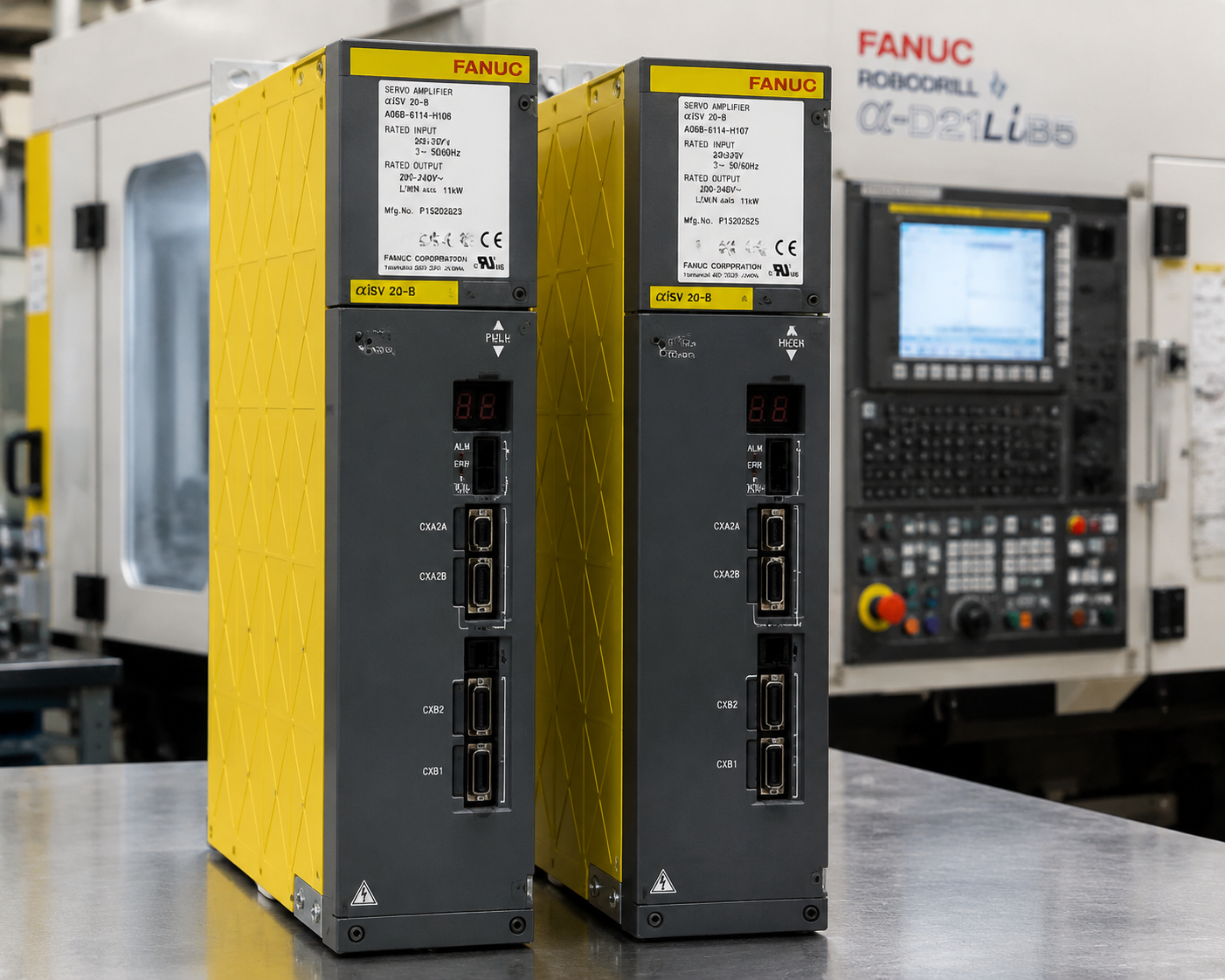
Overview of FANUC A06B-6114-H106 and A06B-6114-H107 Alpha iSV Servo Modules
The FANUC Alpha iSV servo modules, specifically the A06B-6114-H106 and A06B-6114-H107, are essential components in modern industrial automation. These servo modules are designed to deliver precise motion control, making them popular in CNC machines, robotic systems, and high-speed manufacturing setups.
While both models belong to the Alpha iSV series, their key differences lie in performance capabilities and specific features. The H106 is generally considered a classic option tailored for standard industrial applications, offering reliable power and straightforward operation. On the other hand, the H107 model brings improvements in response times and energy efficiency, making it more suitable for demanding environments that require quick, accurate motion control.
In a nutshell, these models are built to fit different needs: the H106 for basic, dependable automation tasks, and the H107 for operations requiring higher performance and faster response. Understanding their general info helps in making the right choice for your CNC machinery or industrial automation setup. For more details on system compatibility and integration, check out the FANUC servo compatibility guide.
Technical specifications comparison of FANUC Alpha iSV servo modules
When choosing between the FANUC A06B-6114-H106 and A06B-6114-H107, understanding their technical specs is key. Both are part of the Alpha iSV servo module line, but they differ in power, size, and hardware setup.
Power ratings and motor compatibility
| Specification | A06B-6114-H106 | A06B-6114-H107 |
|---|---|---|
| Rated power output | ~2.0 kW | ~3.0 kW |
| Max torque output | 15 Nm | 20 Nm |
| Voltage supply | 200-240 V AC | 200-240 V AC |
| Continuous current | 10 A | 15 A |
Dimensions and hardware configuration
| Specification | A06B-6114-H106 | A06B-6114-H107 |
|---|---|---|
| Width | Compact (~50 mm wide) | Slightly larger (~60 mm wide) |
| Depth | Minimal (~150 mm) | Slightly deeper (~170 mm) |
| Hardware setup | Fewer I/O options | Additional inputs/outputs |
| Cooling requirements | Standard cooling | Higher cooling needs for increased power |
Both models are designed to fit into standard FANUC servo environments but differ slightly in physical size and hardware capacity. The H106 typically suits smaller CNC machines or automation tasks, while the H107 is better for larger, load-heavy applications where higher power and torque matter.
Voltage and current specifics
Both modules operate on similar voltage ranges but differ in maximum current ratings, influencing their ability to sustain load without overheating or failure. The H107’s higher current capacity allows it to deliver more torque, making it suitable for demanding industrial applications.
Hardware configuration and interface
The hardware configuration of these modules impacts how they connect and communicate with other system parts. The H107 features additional communication ports and I/O options to support complex automation setups, while the H106 offers a simplified setup ideal for standard tasks.
In , these technical differences directly affect their performance, size, and applicable scenarios. For more details on integrating these modules, explore our FANUC servo compatibility tips.
Performance and efficiency differences: Response times, torque output, energy consumption, heat dissipation
When comparing the FANUC Alpha iSV servo modules A06B-6114-H106 and A06B-6114-H107, their performance and efficiency are key factors that can influence your decision. Both models are designed to deliver precise control and reliable operation, but there are notable differences worth considering.
In terms of response times, the H107 typically offers faster servo response, making it better for high-speed applications where quick adjustments are essential. This helps in reducing cycle times and improving overall throughput, which is crucial for CNC machinery and robotics. The A06B-6114-H106, while efficient, tends to have slightly longer response times but still performs well under most standard conditions.
Torque output is another point where these modules differ. The H106 normally provides higher torque capacity, suitable for heavier loads and demanding industrial automation components. Conversely, the H107 emphasizes quick reaction and may have slightly lower torque but compensates with improved energy efficiency.
Energy consumption is where the H107 often shines. Its advanced hardware configuration allows it to operate more efficiently, reducing energy costs over time, especially in continuous-use environments. This also means less heat generated during operation, which aids in heat dissipation and reduces cooling requirements—a big plus for long-term maintenance.
Heat dissipation is vital for keeping servo modules running smoothly. The H107’s optimized design helps it run cooler, contributing to longer service life and fewer downtime issues. The H106, with its higher torque output, might generate more heat during intensive tasks, so proper cooling measures are necessary.
Overall, these performance and efficiency differences highlight that the A06B-6114-H107 is geared towards rapid response and energy efficiency, ideal for applications where quick movements are key. Meanwhile, the A06B-6114-H106 is better suited for high-torque needs, especially in heavy-duty CNC machining scenarios. For optimal results, consider your specific application demands and expected workload when choosing between these two Alpha iSV servo modules.
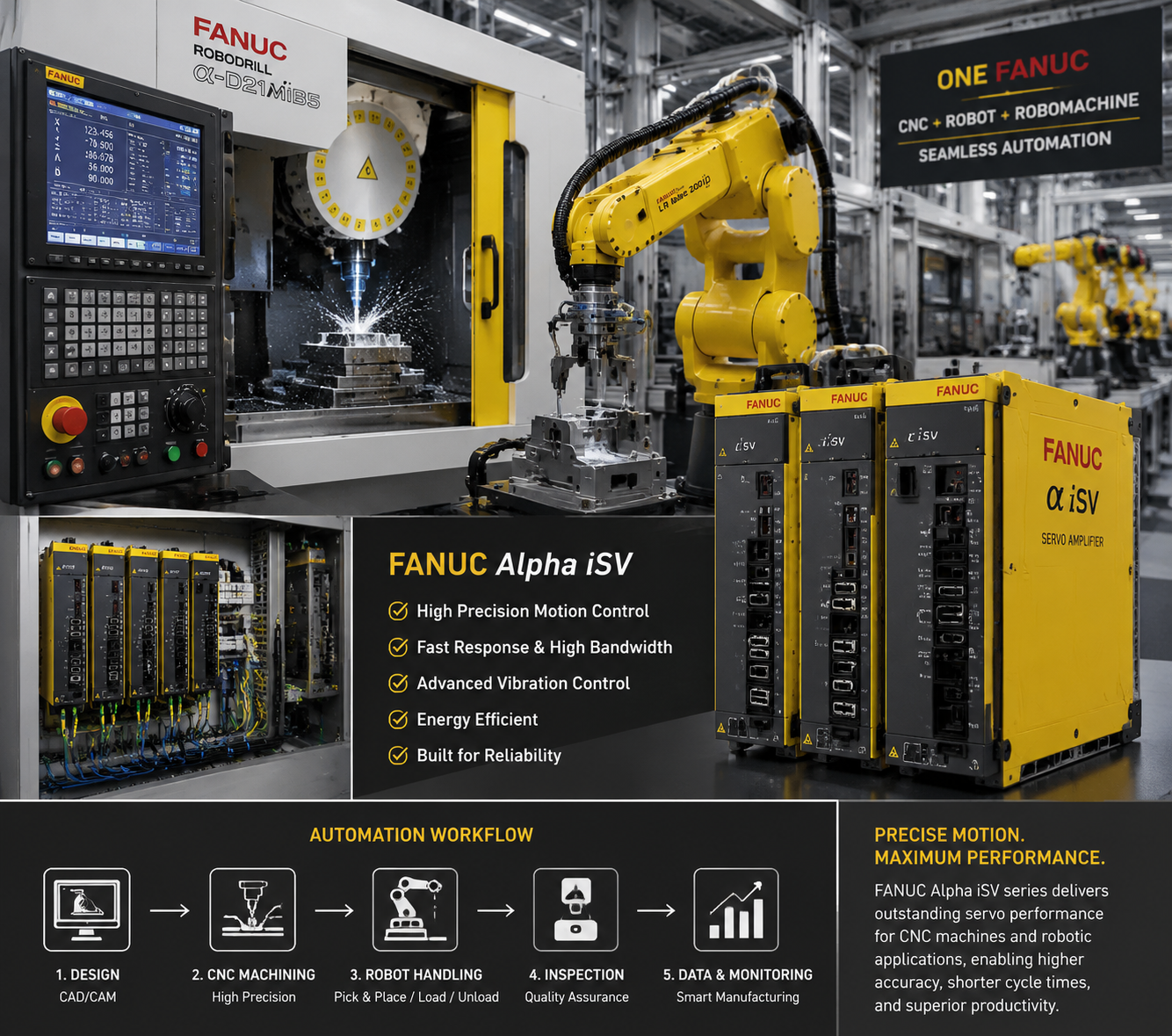
Compatibility and Integration Considerations for FANUC Alpha iSV Servo Modules
When choosing between the FANUC A06B-6114-H106 and A06B-6114-H107, understanding system compatibility and integration is crucial. Both Alpha iSV servo modules are designed to work seamlessly with FANUC CNC systems, but there are some differences to keep in mind.
In terms of firmware requirements, it’s important to verify that your CNC controller or machine supports the specific version needed for these modules. Typically, the H106 and H107 models have similar firmware prerequisites, but always check the latest FANUC updates to ensure smooth operation. You can find relevant firmware compatibility details on FANUC’s official notes or through trusted suppliers like OUKE industrial solutions.
Regarding ease of integration, both models are built for straightforward installation into existing FANUC control setups. They are compatible with a wide range of FANUC servo motors and amplifiers, making upgrades or replacements simple—especially for CNC machinery that relies on Alpha iSV servo performance. Proper integration may involve updating your servo amplifier settings or firmware, so consulting installation guides or working with a certified technician is recommended. For a detailed FANUC servo installation guide, visit OUKE.
Additionally, ensure your system’s hardware configuration supports the servo module’s physical form factor, power ratings, and communication protocols. Compatibility extends to dimensions, voltage, and current ratings, which are key factors for reliable operation and avoiding hardware failures.
Overall, both Alpha iSV servo modules are designed for compatibility with modern FANUC CNC systems, but always double-check your machine’s specifications and firmware versions before making the switch. Proper integration not only minimizes downtime but also guarantees optimal servo performance and longevity in your automated processes.
Application Scenarios and Ideal Use Cases for FANUC Alpha iSV Servo Modules
FANUC Alpha iSV servo modules, including models like the A06B-6114-H106 and A06B-6114-H107, are well-suited for a variety of industrial automation applications. These modules excel in environments that require precise control, high speed, and reliable performance.
Common industries deploying these modules include automotive manufacturing, aerospace, electronics, and general machine tool production. They’re often used in CNC machines, robotics, and automated assembly lines, where smooth and accurate servo motor control is essential. For example, in CNC machining centers, these servo modules help achieve high-precision cuts and efficient operation. If you’re working with high-speed machining or production of complex parts, these modules can meet the demands for quick response times and consistent torque.
Load capacities vary depending on the specific model, but generally, Alpha iSV modules support medium to high load applications. They are capable of managing large servo motors, making them great for equipment that handles heavy or complex loads. For example, in CNC machines that cut large metal blocks or in robotic arms with multiple degrees of freedom, these servo modules ensure stable operation without sacrificing speed or accuracy.
For businesses looking to enhance their automation system, choosing the right Alpha iSV servo module depends on the specific load, speed, and precision requirements. Whether you’re updating existing equipment or designing new machinery, understanding these application scenarios helps ensure a smooth integration process. For a complete look at compatible motors and how they fit into your system, you might want to review high-performance CNC servo motors.
Pros and Cons of FANUC A06B-6114-H106: Advantages, Limitations, Best Suited Environments
The FANUC Alpha iSV servo module A06B-6114-H106 offers a range of benefits that make it a solid choice for many industrial automation needs. Its main advantages include high responsiveness and reliable torque output, which are essential in applications that demand precision and quick acceleration. This model is known for robust performance in environments like CNC machining centers, where consistent and smooth operation is crucial. Additionally, its hardware setup is generally straightforward, making integration into existing systems smoother.
However, there are some limitations. The H106 tends to have less advanced energy efficiency compared to newer models like the H107. Its heat dissipation might also be less optimal under extended high-load conditions, which could lead to overheating if not properly managed. This makes it less ideal for continuous, heavy-duty use without adequate cooling measures.
In terms of environments, the FANUC A06B-6114-H106 is best suited for medium-duty applications, such as smaller CNC machines or robotic arm controls where loads aren’t excessively heavy. It works well in manufacturing floors focused on precision tasks and moderate production, but might not be the best fit for high-load or high-speed industrial automation systems that demand the latest in efficiency and thermal management. For industries prioritizing reliability with a controlled budget, the H106 remains a solid, cost-effective option.
Pros and Cons of FANUC A06B-6114-H107: Strengths, Weaknesses, and Ideal Applications
The FANUC A06B-6114-H107 is a solid choice for many industrial automation setups, but like any servo module, it has its strengths and limitations.
Strengths:
High Response Speed: The Alpha iSV servo module offers quick response times, making it great for applications where fast, precise movements are needed.
Enhanced Torque Output: It typically delivers better torque performance compared to earlier models, which helps with demanding loads and complex machining tasks.
Energy Efficiency: The H107 model has optimized power consumption features, reducing operational costs, especially in continuous-duty environments.
Robust Hardware Design: Built for industrial use, it’s durable and reliable, capable of running in tough conditions.
Easy System Integration: Designed to seamlessly work with FANUC CNC systems, with straightforward installation and setup options.
Weaknesses:
Compatibility Limitations: While compatible with many FANUC CNC machines, some older systems may need firmware updates or additional configuration.
Price Point: The H107 model tends to be slightly more costly, which could impact budgets for smaller operations.
Heavier and Larger: Compared to some newer servo modules, it might take up more space, which can be a challenge for compact setups.
Firmware Updates Needed: Ongoing updates are necessary to maintain optimal compatibility, which could involve downtime or additional support.
Ideal Applications:
The FANUC A06B-6114-H107 is best suited for high-precision CNC machining, especially in manufacturing environments requiring reliable torque and fast response. It works well in industries like aerospace, automotive parts production, and complex mold making, where load capacities are high, and accuracy is critical.
For those interested in upgrading or replacing existing modules, it’s good to compare this with other FANUC servo modules, considering your specific machine setup. For more info on compatible parts and accessories, check out the FANUC servo installation guide.
Pricing, availability, and sourcing tips for FANUC Alpha iSV Servo Modules
When it comes to pricing and sourcing the FANUC Alpha iSV servo modules like the A06B-6114-H106 and A06B-6114-H107, the market is quite competitive. Generally, the H107 tends to be slightly more expensive due to its advanced features and performance capabilities. However, prices fluctuate based on supply chain factors, demand, and whether you’re buying new or refurbished units.
For availability, authorized FANUC distributors and reputable suppliers like OUKE industrial solutions are your best bet. These sources ensure genuine parts, proper support, and reliable warranties. If you’re in a hurry, check with local automation parts stores or trusted online marketplaces, but always verify the seller’s reputation.
Sourcing tips include requesting detailed specifications and support options upfront, especially for critical applications. For example, OUKE offers comprehensive technical support, installation guidance, and troubleshooting assistance, making the process smoother. Additionally, buying directly from certified suppliers can help guarantee compatibility and quality.
Keep in mind that pricing may also be influenced by the availability of firmware updates and the need for firmware upgrade services to ensure smooth integration with your existing automation system. For professional installations and ongoing maintenance, consider consulting with suppliers about OEM support options, including spare parts and technical service plans.
Finally, as the demand for industrial automation components like the FANUC Alpha iSV servo modules grows, staying updated on market trends can help you secure better deals and avoid long lead times. Regularly checking with trusted resellers like OUKE can keep you in the loop on the latest offers and supply status.
Installation, Maintenance, and Troubleshooting Tips for FANUC Alpha iSV Servo Modules
Installing your FANUC Alpha iSV servo module, whether it’s the A06B-6114-H106 or the A06B-6114-H107, calls for careful attention to safety and proper procedures. Always follow the manufacturer’s installation guide to ensure correct mounting, wiring, and system integration. Proper grounding and avoiding static discharge are crucial for protecting sensitive components.
Maintenance is key to keeping your servo system running smoothly. Regular inspection of connections, ensuring cooling fans and heat sinks are clear, and checking the hardware for signs of wear or damage can prevent unexpected breakdowns. It’s also wise to keep firmware updated—FANUC provides updates that improve performance and compatibility, which helps in troubleshooting and extending your system’s lifespan. For maintenance routines, consider periodic testing of torque output and response times to catch issues early.
Troubleshooting common issues involves checking the power supply, verifying wiring connections, and reviewing alarm logs. If the servo module isn’t responding or exhibits abnormal temperature increases, consult the FANUC Alpha iSV servo installation guide for detailed steps. Sometimes, replacing a faulty module or recalibrating the system can resolve performance hiccups.
Remember, safety in maintenance can’t be overstated—disconnect power sources before any work, and follow lockout/tagout procedures to prevent accidents. Routine upkeep, including cleaning dust from heatsinks and verifying hardware integrity, keeps your CNC machine and other industrial automation components operating at peak efficiency. Proper installation, diligent maintenance, and prompt troubleshooting are essential for reliability and minimizing downtime in your automated systems.
Final Recommendations: Which FANUC Alpha iSV Servo Module Fits Your Needs?
Choosing between the FANUC A06B-6114-H106 and A06B-6114-H107 depends heavily on your specific application and operational requirements. Both models are high-quality Alpha iSV servo modules, but they each have unique strengths.
If you need a cost-effective option suitable for standard automation tasks, the H106 might suit you best. It generally offers reliable performance for lighter loads or less demanding CNC machinery. On the other hand, the A06B-6114-H107 excels where higher performance and torque output are essential, such as in complex machining or heavy-duty industrial environments.
Key decision factors include:
- Performance needs: Response times, torque capacity, and energy efficiency. For more demanding CNC applications, the H107’s advanced features may offer a real advantage.
- System compatibility: Ensure your existing setup supports the selected module, including firmware requirements and hardware interface protocols. FANUC servo compatibility is crucial for seamless integration.
- Budget constraints: While the H107 may have a higher upfront cost, its efficiency could reduce long-term energy expenses.
- Application type: For lightweight or precision tasks, the H106 could be sufficient. For heavy loads or high-volume manufacturing, the H107’s strength is clear.
Consulting with an industry expert or distributor can provide personalized advice tailored to your CNC machinery and automation goals. Remember, investing in the right servo module can improve machine performance, reduce downtime, and optimize productivity.
In , evaluate your current automation setup, load requirements, and future scalability. Both FANUC Alpha iSV servo modules are excellent choices, but picking the right one boils down to matching their specifications with your operational demands.