

Why Energy-Efficient Inverters Are Critical for Modern Industry
Rising energy costs, decarbonization targets, and stricter regulations are compelling industries to adopt advanced inverter solutions. Energy-saving motor control solutions like variable frequency drives (VFDs), solar, and hybrid inverters significantly reduce plant energy consumption. These inverters optimize motor speed, improve power quality, and enable renewable energy integration, directly supporting sustainability goals. Investing in high-efficiency industrial drive systems not only lowers operational costs but also enhances compliance with environmental standards, making inverter selection a strategic priority for forward-thinking manufacturers.
This guide is essential for plant and maintenance engineers, energy managers, procurement teams, and project engineers working in industrial sectors. These professionals are responsible for optimizing energy use, reducing operational costs, and ensuring system reliability. Understanding the decision-making landscape for inverter selection in large facilities helps them choose the most energy-efficient industrial drives, such as variable frequency drives (VFDs) and hybrid inverters, that align with their operational needs. Making informed choices about high-efficiency industrial drive systems can significantly lower plant energy consumption and enhance sustainability efforts.
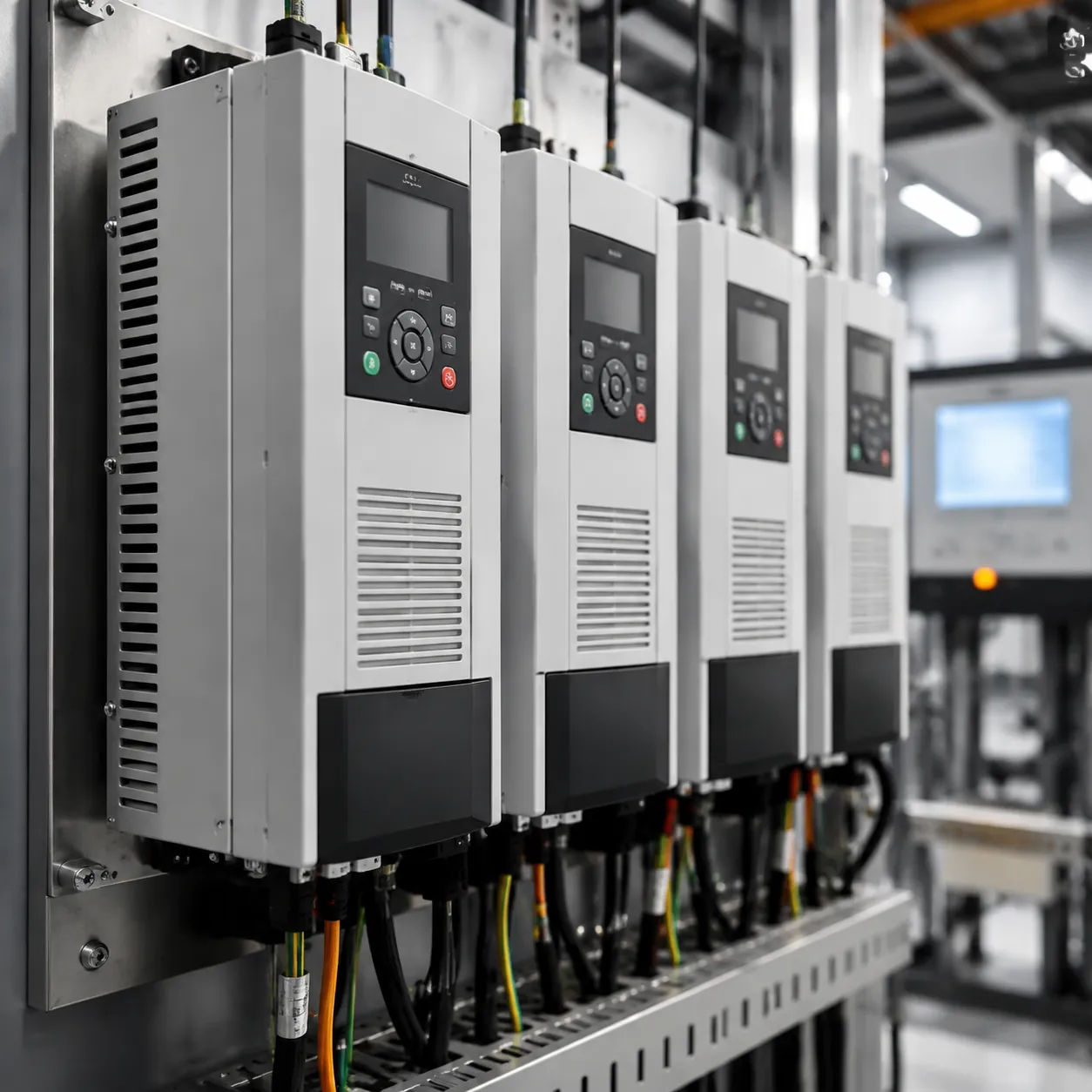
What You’ll Discover in This Guide
I keep this focused on the decisions that matter most for industrial variable frequency drive efficiency, energy-saving motor control solutions, and long-term operating cost.
What I cover
| Topic | What you get |
|---|---|
| Efficiency basics | How high-efficiency industrial drive systems cut plant energy use |
| Model comparison | How I weigh conversion efficiency, THD, standby power, and partial-load performance |
| Top inverter profiles | Quick take on the best inverters for heavy industrial applications, including Siemens SINAMICS solutions |
| Cost impact | Simple ROI of inverter upgrades in manufacturing and lifecycle cost view |
What matters in practice
- Better motor control: Matching speed to load reduces wasted power in pumps, fans, and conveyors.
- Cleaner power: Lower harmonics support industrial power quality and THD reduction.
- Smarter recovery: Regenerative drive technology for factories helps capture energy instead of wasting it.
- Stronger selection logic: I compare electrical specs, reliability, safety, and automation fit before I recommend a unit.
- Clear ROI: I look at payback, maintenance, and downtime, not just the sticker price.
Siemens focus
For readers comparing Siemens options, I also reference a practical Siemens SINAMICS drive comparison guide to help narrow the choice fast.
Understanding industrial inverters and how they boost energy efficiency is key to optimizing plant operations. Common types include variable frequency drives (VFDs), solar string inverters, and hybrid inverters used in microgrids. VFDs are especially popular for controlling motor speeds, reducing energy consumption in pumps and fans. Solar string inverters convert DC power from solar panels into usable AC, maximizing renewable energy use. Hybrid inverters combine these functions, enabling seamless integration into microgrids and enhancing overall energy management.
Inverters improve energy use through several mechanisms: matching motor speeds to load demands, regenerative braking to recover energy during deceleration, and harmonic reduction to improve power quality. Core efficiency metrics such as conversion efficiency, total harmonic distortion (THD), standby power, and real-world performance are critical when selecting energy-efficient industrial drives. These metrics directly impact operational costs and plant reliability.
Standards and certifications like IEC, UL, IEEE, EN, and IE3/IE4 ensure inverters meet safety, quality, and efficiency benchmarks. Adhering to these standards guarantees that your inverter system will perform reliably under industrial conditions, helping to reduce plant energy consumption and support sustainability goals.
Key Criteria for Selecting an Energy‑Efficient Industrial Inverter
Choosing the right industrial inverter hinges on several critical factors. First, electrical specifications such as voltage, power range, and phase configurations must match your equipment needs. Ensuring compatibility is essential for optimal performance and energy savings.
Efficiency considerations are also vital. Look at peak efficiency, partial load performance, and the total cost of ownership (TCO). An inverter with high efficiency at various loads reduces energy waste and lowers operational costs. For example, inverters like the Siemens SINAMICS G120 are known for their energy-saving motor control solutions, making them a reliable choice.
Reliability factors—such as operating temperature, IP ratings for dust and water resistance, mean time between failures (MTBF), and maintenance requirements—are crucial for minimizing downtime. Industrial environments demand rugged inverters that can withstand harsh conditions.
Power quality is another key point. Effective harmonic mitigation and grid compliance help improve overall plant power quality, reducing issues like THD (Total Harmonic Distortion). Ultra-low harmonic industrial inverters, like the ABB ACS880, excel in this area.
Safety features must not be overlooked. Overcurrent protection, short-circuit safeguards, and integrated safety functions protect personnel and equipment. Digitalization and control capabilities, including connectivity, remote monitoring, and system integration, enable smarter, more efficient plant operations.
Finally, consider application-specific needs. Load profiles, environmental conditions, and whether the drive is for high-torque or high-speed applications influence inverter selection. Tailoring your choice ensures maximum efficiency and ROI, especially when upgrading existing systems or integrating into microgrids.
Top 5 Inverters for Industrial Energy Efficiency: In-Depth Profiles
A. Siemens SINAMICS G120 – Versatile, high-efficiency drive for general industry
The Siemens SINAMICS G120 is known for its flexibility and energy-saving motor control solutions, making it ideal for a wide range of industrial applications. It offers high conversion efficiency, advanced control features, and seamless integration with automation systems. Its energy-saving capabilities help reduce plant energy consumption, delivering a strong ROI. The G120 is perfect for pumps, fans, and conveyor systems where reliable, efficient operation is essential. For enhanced control options, consider pairing it with the Siemens HMI KP700 for real-time monitoring and adjustments see here.
B. Siemens SINAMICS S120 – High-performance motion control for demanding applications
Designed for high-end motion control, the SINAMICS S120 excels in applications requiring precise speed and torque regulation. Its regenerative drive technology captures energy during deceleration, increasing overall efficiency. The system’s modular architecture allows for scalable solutions, integrating easily into complex automation setups. Its high efficiency and harmonic mitigation features make it suitable for high-torque, high-speed machinery, ensuring minimal energy waste and optimal plant performance.
C. ABB ACS880 – Ultra-low harmonic drive for heavy loads
ABB’s ACS880 inverter stands out for its ultra-low harmonic output, making it ideal for heavy industrial loads that demand power quality and efficiency. Its harmonic mitigation reduces grid disturbances, improving overall energy efficiency and reducing maintenance costs. The drive’s robust design allows operation in harsh environments, supporting applications like steel mills, mining, and large HVAC systems. Its high efficiency and reliability help lower total cost of ownership while maintaining compliance with strict power quality standards.
D. Yaskawa GA700 – Flexible, efficient drive for broad uses
The Yaskawa GA700 offers a versatile, energy-efficient solution suitable for a wide range of industrial needs. Its control features support energy-saving motor control solutions, with easy setup and retrofit potential. The drive’s high efficiency and user-friendly interface make it a popular choice for pumps, fans, and material handling equipment. Its modular design ensures straightforward integration into existing systems, helping plants achieve better energy performance with minimal downtime.
E. Industrial Solar String Inverters (e.g., Huawei SUN2000) – For C&I solar applications
Industrial-scale solar string inverters like Huawei SUN2000 are vital for commercial and industrial solar energy strategies. They deliver high efficiency metrics, robust performance, and seamless integration into energy management systems. These inverters optimize energy harvesting from solar arrays, reducing reliance on grid power and supporting decarbonization goals. Their reliability and advanced monitoring features make them a smart choice for large-scale solar projects, ensuring maximum ROI and energy savings over their lifecycle.
Industrial inverters are essential for optimizing energy efficiency and reducing operational costs in manufacturing and processing plants. They help match motor speeds to actual load demands, significantly cutting energy consumption. Additionally, regenerative drive technology enables energy recovered during braking to be reused, further lowering electricity use. Ultra-low harmonic industrial inverters improve power quality by minimizing harmonic distortion, which protects sensitive equipment and ensures compliance with grid standards. When selecting inverters, reliability factors such as temperature tolerance, IP ratings, and maintenance intervals are crucial for continuous operation in demanding environments. Digitalization features like remote monitoring and connectivity enable proactive maintenance and system integration, ensuring maximum uptime. For specific applications like pumps and fans, choosing the right inverter can optimize performance and energy savings, making it vital to understand core efficiency metrics and standards such as IEC, UL, and IE3/IE4 certifications.
Top 5 Inverters for Energy Efficiency: Siemens SINAMICS G120
Siemens SINAMICS G120
I rate the SINAMICS G120 as a strong fit for general industrial energy-saving motor control solutions. It gives me solid industrial variable frequency drive efficiency for pumps, fans, conveyors, and other variable-torque loads where reducing plant energy consumption with drives matters most.
Why it stands out
– High-efficiency industrial drive system for day-to-day production loads
– Built-in energy-saving modes that match motor speed to real demand
– Good option for inverter selection for pumps and fans in U.S. plants
– Supports industrial automation and drive integration with common control systems
– Helps lower operating costs through better partial-load performance and less wasted power
Best use cases
– HVAC and process pumping
– Material handling
– General manufacturing lines
– Retrofit projects focused on ROI of inverter upgrades in manufacturing
Quick take
For plants that want reliable energy-efficient motor speed control without overcomplicating the setup, the G120 is a practical choice. It balances performance, flexibility, and lifecycle value, which is exactly what most industrial buyers need.
Industrial Solar String Inverters
For C&I solar sites, I look for a commercial and industrial solar inverter that keeps conversion losses low and holds up in hot, dusty, high-run-time conditions. A unit like Huawei SUN2000 is a strong example because it combines high conversion efficiency, stable MPPT tracking, and solid monitoring for real-world plant use.
- Best fit: rooftop solar, carports, warehouses, and factory microgrids
- Efficiency focus: high peak efficiency, low standby power, and strong part-load performance
- Power quality: supports cleaner output and better industrial power quality and THD reduction
- Energy strategy: works well with storage and hybrid inverter for industrial microgrids setups
- US needs: remote monitoring, grid support functions, and dependable operation in tough environments
In my view, the real value is not just solar generation. It is the ability to reduce plant energy costs, support decarbonization goals, and make the whole site easier to manage with less waste and better uptime.
Top 5 Inverters for Energy Efficiency in Industrial Applications
I judge inverter choices by one thing first: do they cut real plant energy use without creating power-quality problems? The best industrial variable frequency drive efficiency options are the ones that match load demand, support regenerative drive technology for factories, and keep THD low while improving industrial automation and drive integration.
- Siemens SINAMICS G120 – a versatile pick for pumps, fans, conveyors, and general energy-saving motor control solutions.
- Siemens SINAMICS S120 – built for demanding motion control, regeneration, and high-efficiency industrial drive systems.
- ABB ACS880 – a strong fit for heavy-duty jobs that need ultra-low harmonic industrial inverter performance.
- Yaskawa GA700 – flexible and easy to retrofit for energy-efficient motor speed control.
- Huawei SUN2000 class C&I solar inverter – useful for commercial and industrial solar inverter projects and hybrid inverter for industrial microgrids.
For me, the real value shows up in lower utility cost, better uptime, and a clearer ROI of inverter upgrades in manufacturing.