

In today’s competitive manufacturing landscape, optimizing your CNC control systems is essential for boosting productivity and staying ahead. Whether you’re aiming to reduce cycle times, minimize downtime, or streamline toolpaths, the right strategies can make a significant difference. In this guide, you’ll discover proven techniques to enhance your CNC controls, from software tweaks to hardware upgrades, so you can maximize efficiency and drive your shop’s success. Let’s dive into how you can unlock the full potential of your CNC systems today.
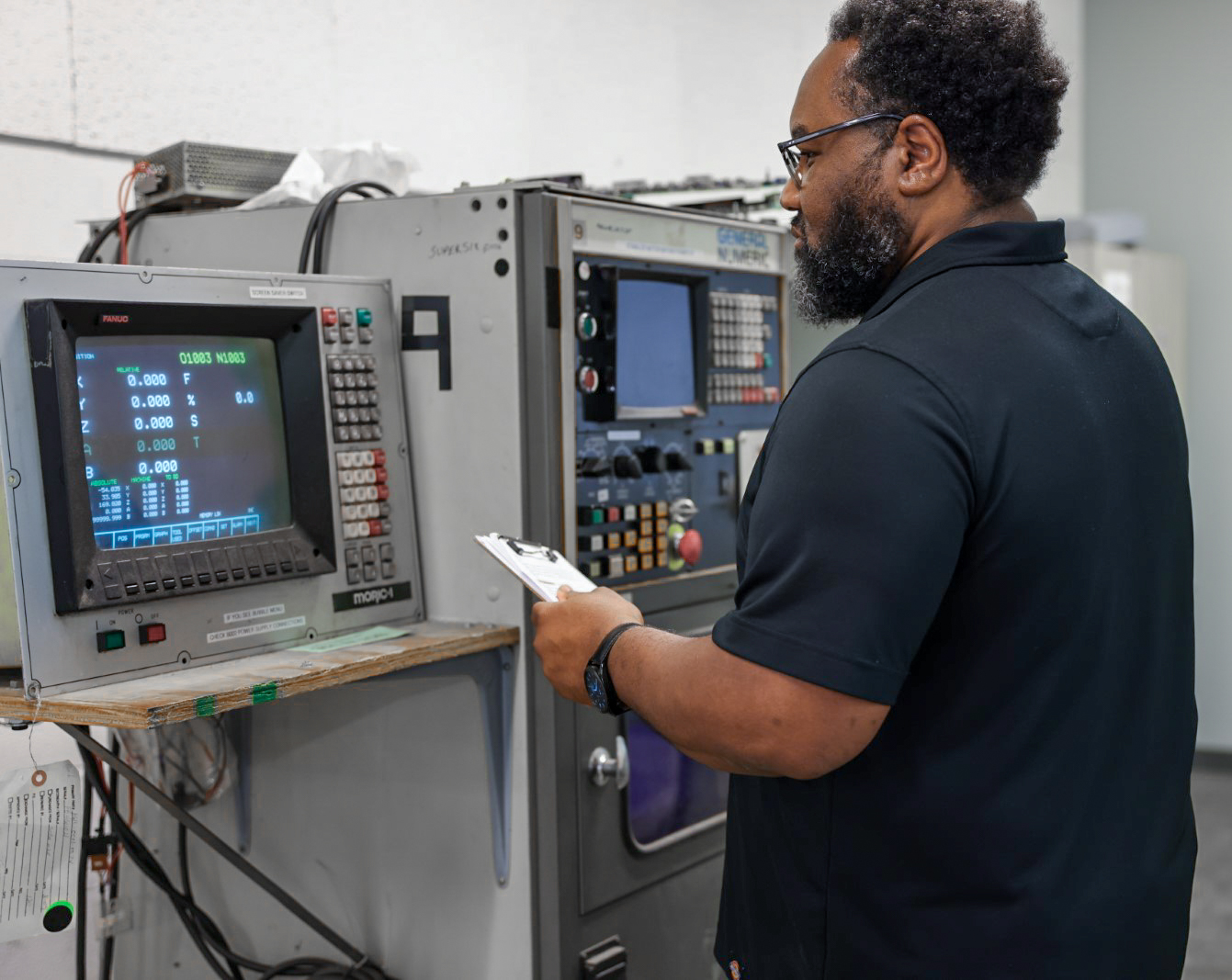
Why CNC Control Optimization Matters
CNC control system optimization has a direct impact on CNC machine productivity improvement. When controllers, PLCs, drives, sensors, and HMIs respond cleanly and consistently, machines cut faster, recover sooner, and hold tighter process control. When they do not, small delays turn into lost output, scrap, and unplanned stops.
What Slows Production
Common control-related issues include:
-
- Obsolete hardware that cannot keep up with current production demands
- Slow response times that increase cycle time and idle time
- Weak signal feedback that reduces accuracy and repeatability
- Hard-to-find replacement parts that extend downtime
- Mismatch between legacy CNC systems and newer software or components
These problems often show up as missed targets, unstable motion, and more time spent troubleshooting than producing.
How Modern Controls Help
Modern CNC control systems improve speed, precision, and reliability by supporting better data flow, faster decision-making, and smoother communication across the machine. A well-planned PLC upgrade for CNC machines or CNC controller retrofit solutions can reduce lag, improve uptime, and support legacy CNC system modernization without unnecessary risk.
For shops managing aging equipment, the fastest gains often come from minimizing CNC machine downtime, replacing discontinued CNC control components, and using a global supplier of automation parts with the right inventory and delivery support.
Diagnosing your CNC control system performance is the first step toward maximizing productivity. Start by mapping your control architecture and data flow to understand how information moves through your system. This helps identify bottlenecks and inefficiencies in control components like PLCs, drives, and sensors.
Establish clear baseline metrics such as cycle time, Overall Equipment Effectiveness (OEE), and Mean Time Between Failures (MTBF). These indicators reveal how well your control system is supporting your operations.
Signs your control system may be holding you back include obsolete hardware that slows response times or causes frequent failures. Slow response from controllers or outdated software can lead to increased downtime and reduced accuracy. Regularly evaluating these factors ensures you catch issues early and plan effective upgrades.
Legacy CNC Controller Upgrade for Better Productivity
When I see slow response, random faults, or a machine that keeps stopping for no clear reason, I treat the controller and PLC as the first places to check. Legacy CNC control systems lose speed and stability over time, and that shows up as longer cycle times, more downtime, and more operator frustration.
When Replacement Makes Sense
| Sign | What it usually means |
|---|---|
| Slow start-up or laggy inputs | The controller is aging or overloaded |
| Hard-to-find parts | Obsolescence risk is growing |
| Repeated faults after resets | The system is no longer stable |
| Limited software support | Firmware and compatibility are holding the machine back |
For CNC machine productivity improvement, I focus on upgrades that reduce risk, not just replace hardware.
What a Modern Platform Gives Me
-
- Faster response for better motion control
- Cleaner communication across PLC, drives, and HMI
- Better precision with less drift and fewer interruptions
- Easier CNC controller retrofit solutions for phased-out equipment
- Stronger support for legacy CNC system modernization
PLC Migration That Stays Compatible
A PLC upgrade for CNC machines has to match the machine logic, I/O layout, and drive setup. I check the full control path before swapping parts, so the new system fits the old machine without creating new problems.
A good starting point is a hands-on guide to PLC, VFD, and HMI integration, especially when I need to keep the control stack aligned during a retrofit.
Firmware and Software Tuning
Small software issues can slow a good machine down. I look at:
-
- Firmware version and update path
- Software compatibility with current hardware
- Parameter backup before any change
- Logic cleanup to remove outdated steps
That kind of firmware and software optimization helps keep the machine stable and ready for daily production.
OUKE Support for Controller Upgrades
OUKE helps me source industrial automation spare parts for brand-name control systems, including hard-to-find and discontinued CNC control components. That matters when I need a direct replacement, not a long shutdown.
A good example is a modern Mitsubishi brand-new I/O unit and PLC controller, which fits well into upgrade planning when I need a reliable PLC path.
I also value the practical side: fast quotes within 24 hours, global shipping, and brand-new parts backed by a 1-year warranty.
Refining motion profiles and G-code is essential for achieving shorter cycle times and boosting CNC productivity. Fine-tuning parameters like acceleration, jerk, and look-ahead helps optimize machine responsiveness while reducing unnecessary movements. Adjusting these settings minimizes idle time and improves overall efficiency.
Optimizing G-code and CAM strategies also plays a critical role. Streamlining tool paths, reducing unnecessary passes, and standardizing feed and speed settings for different materials can cut cycle times significantly. Consistent parameters ensure predictable results and easier process control.
Synchronizing PLC logic with CNC motion is vital for seamless operation. When PLC programs are aligned with motion profiles, it minimizes delays and idle periods. This coordination enhances cycle efficiency and reduces machine downtime.
To support these improvements, maintaining a high-quality inventory of multi-brand control components—such as encoders, drives, and PLCs—is key. OUKE offers a wide selection of parts to ensure your control system stays responsive and reliable, even when fine-tuning your motion profiles.
Implementing these strategies results in faster, more precise machining, directly impacting your bottom line. Regularly review and adjust your motion parameters, G-code, and control synchronization to keep your CNC system operating at peak productivity.
Ensuring Accurate Feedback with Encoders and Sensors
High-resolution encoders are critical for achieving precise CNC control and optimal machine performance. Choosing the right encoder ensures accurate feedback on axis position, which directly impacts cut quality and cycle times. High-quality encoders, like those from Heidenhain or SICK, help prevent errors caused by signal degradation or noise, maintaining consistent operation.
Maintaining signal integrity and noise reduction is essential for reliable feedback. Proper grounding, shielding, and cable management minimize interference that can cause inaccurate readings or system errors. Regular calibration and routine replacement of worn or failing sensors help sustain high accuracy over time.
Calibration, replacement, and maintenance routines are key to preventing feedback issues. Establishing a schedule for checking encoder alignment and signal quality ensures ongoing precision. When sensors or encoders fail, quick access to a broad inventory of multi-brand sensor solutions becomes vital. OUKE supports this need by providing a wide range of OEM and compatible sensors, helping you keep your CNC system running at peak performance without delays.
Optimizing Drives, Spindles, and Motors to Reduce Downtime
I start with the drive train because weak drive and motor settings show up fast as slow response, poor surface finish, and extra downtime. For CNC machine productivity improvement, the goal is simple: match the load, tune the controls, and keep heat under control.
Match the rating to the job
A drive that is undersized or a motor that is poorly matched will struggle under real cutting load.
-
- Size the motor and drive for the actual application, not just the nameplate
- Check duty cycle, torque demand, and speed range before swapping parts
- Use the right variable frequency drive for CNC spindle control when speed stability matters
- Keep spare industrial automation spare parts on hand for critical axes and spindles
Tune for stability and response
Clean servo drive tuning and setup helps the machine react faster and run smoother.
-
- Tighten acceleration and deceleration settings to avoid hunting
- Check current limits and feedback stability on servo drives
- Revisit VFD parameters when spindle speed drifts or stalls
- Review spindle drive faults early; I rely on common spindle motor drive faults and maintenance methods when I am cutting downtime at the source
Control heat before it becomes a failure
Heat kills performance and shortens component life, especially in busy shops.
-
- Keep cabinets clean and airflow clear
- Watch ambient temperature and dust around drives and motors
- Replace worn cooling fans and filters before they fail
- Use preventive checks to support predictive maintenance for CNC controls
Keep multi-brand replacement options ready
I keep the repair plan practical by sourcing across major brands, including Fanuc, Yaskawa, Danfoss, Siemens, and ABB. That makes it easier to handle legacy CNC system modernization and reduce waiting time for discontinued CNC control components.
OUKE supports that approach with multi-brand drive and motor supply, 10,921+ SKUs in stock, 48-hour expedited shipping, and warranty coverage on new and used parts. That is how I keep CNC machine downtime low and get systems back in production faster.
Leveraging HMIs and Teach Pendants to Speed Up Setup and Reduce Errors
Upgrading operator interfaces is key to improving CNC control system productivity. Modern HMIs and teach pendants make machine setup faster and more accurate, reducing operator errors and downtime. An intuitive, standardized control screen design ensures operators can quickly understand and operate the system, minimizing training time and mistakes.
Using teach pendants for faster, safer machine setup allows operators to make adjustments on the fly without risking safety or precision. These upgrades streamline workflows, improve responsiveness, and ensure consistent operation across multiple machines.
OUKE plays a vital role in supplying and supporting HMI and pendant upgrades. We offer a wide range of multi-brand solutions, ensuring compatibility and quality. Our support helps you implement user-friendly interfaces that boost productivity and safety, all while minimizing the risk of control system errors.
Connecting CNC control systems to shop floor data is essential for continuous improvement in manufacturing. Implementing real-time monitoring protocols like MTConnect and OPC UA allows you to gather live data from your CNC machines, providing immediate insights into operational performance. This data helps identify hidden bottlenecks that may be slowing production or causing unplanned downtime. Building customized dashboards for maintenance and production teams enables quick decision-making and proactive management. OUKE supports legacy equipment connectivity by offering reliable solutions that integrate older CNC systems into modern data networks, ensuring your entire operation benefits from real-time insights and improved efficiency.
Spare Parts Strategy for CNC Control Systems
I treat spare parts planning as a direct way to minimize CNC machine downtime. The goal is simple: keep the critical control items ready before a fault turns into a long stop.
What I keep covered
-
- PLC modules and controller boards
- Servo drives, VFDs, and power sections
- High-resolution encoders and sensors
- HMIs and teach pendants
How I balance cost and risk
I do not overbuy low-risk items. I focus inventory on the parts that can shut down a machine fast, while using a trusted source for the rest. That keeps industrial automation spare parts spending under control without leaving weak spots in production.
Managing obsolescence
Old hardware is where delays get expensive. When a part is discontinued, I look for a matching replacement quickly and verify compatibility before it reaches the floor. For a deeper look at this approach, I rely on obsolete parts management for industrial equipment to reduce risk and keep legacy CNC system modernization on track.
Why OUKE fits this job
OUKE gives me access to 10,921+ SKUs, multi-brand support, and hard-to-find discontinued CNC control components across brands like Siemens, Fanuc, Mitsubishi, ABB, Yaskawa, and more. With 48-hour expedited shipping, 7-day global reach, and fast 24-hour quotes, I can move quickly when a critical part fails. New items also carry a 1-year warranty, which adds another layer of confidence when I am sourcing for production.
Maintaining and improving control system performance requires ongoing training and standardization. Implementing preventive and predictive maintenance practices helps identify issues before they cause downtime, ensuring consistent operation. Regularly training operators and engineers on upgraded systems maximizes their efficiency and reduces errors, especially when integrating new hardware like PLCs, drives, or HMIs. Standardizing control configurations across multiple machines simplifies troubleshooting and streamlines maintenance routines. Creating comprehensive documentation and fostering continuous improvement cycles are essential to adapt quickly to evolving technology and minimize control system downtime. Partnering with a reliable supplier like OUKE ensures access to quality parts and expert support, enabling your team to sustain peak control system performance effectively.
Partnering with OUKE to Execute Your Control System Optimization Plan
Choosing a specialized supplier like OUKE ensures your control system upgrades are efficient and reliable. Our extensive inventory supports a wide range of brands and models, making it easy to find the right parts quickly. With rapid 48-hour delivery and global reach, OUKE minimizes downtime and keeps your projects on track.
We support your entire upgrade process—from diagnostics to installation—by providing high-quality, multi-brand parts such as PLC modules, drives, encoders, and HMIs. Our expertise helps you avoid delays caused by obsolete or discontinued components, ensuring seamless integration and long-term performance.
Engaging with OUKE is simple. Contact us for a detailed consultation, share your part numbers, or request a competitive quote. Our team is ready to assist with hardware sourcing, technical support, and custom solutions to accelerate your control system optimization. Trust OUKE as your partner for reliable, fast, and cost-effective automation parts.
How to Optimize Your CNC Control Systems for Better Productivity
Key Takeaways
-
- I start with a clear CNC control system optimization audit: diagnostics, cycle time, OEE, and MTBF.
- I move fast on PLC upgrade for CNC machines, legacy CNC system modernization, and CNC controller retrofit solutions when old hardware slows response.
- I protect accuracy with a high-resolution encoder for CNC axis, clean signal paths, and regular calibration.
- I cut lost time with servo drive tuning and setup, VFD checks, HMI updates, and CNC shop floor data monitoring.
- I keep critical industrial automation spare parts on hand so minimizing CNC machine downtime does not depend on a long lead time.
My Next Step
I build a simple plan around the parts that matter most: controllers, PLCs, drives, encoders, HMIs, and teach pendants. For fast sourcing, I keep access to CNC systems parts from OUKE, including discontinued CNC control components and multi-brand replacements.
Why I Use OUKE
-
- Global inventory with 10,921+ SKUs
- Fast quotes within 24 hours
- 48-hour expedited shipping on urgent orders
- 1-year warranty on brand-new items and 3-month warranty on used parts
- Support for Siemens, Fanuc, Mitsubishi, Allen-Bradley, Yaskawa, Danfoss, and other major brands
Bottom Line
I treat CNC control system upgrades as a direct way to boost CNC machine productivity improvement, reduce risk, and keep production moving with reliable parts and practical support.