

Choosing the right automation brand for your shop floor is critical to maximizing efficiency and ROI. The CNC control system is the brain behind your manufacturing process, directly impacting productivity, precision, and ease of operation. Selecting a reliable and feature-rich system can reduce downtime and improve overall performance.
Market leaders like Siemens and Fanuc dominate the industry, each bringing unique strengths. Fanuc is known for its legacy stability and widespread use in high-volume, repetitive production environments. Siemens offers a modular, open architecture with advanced digital capabilities, making it ideal for complex and high-precision applications.
This comparison will cover core architecture, programming methods, shop floor performance, costs, and digital integration. By understanding these key differences, you can make an informed decision that aligns with your production needs and future growth.
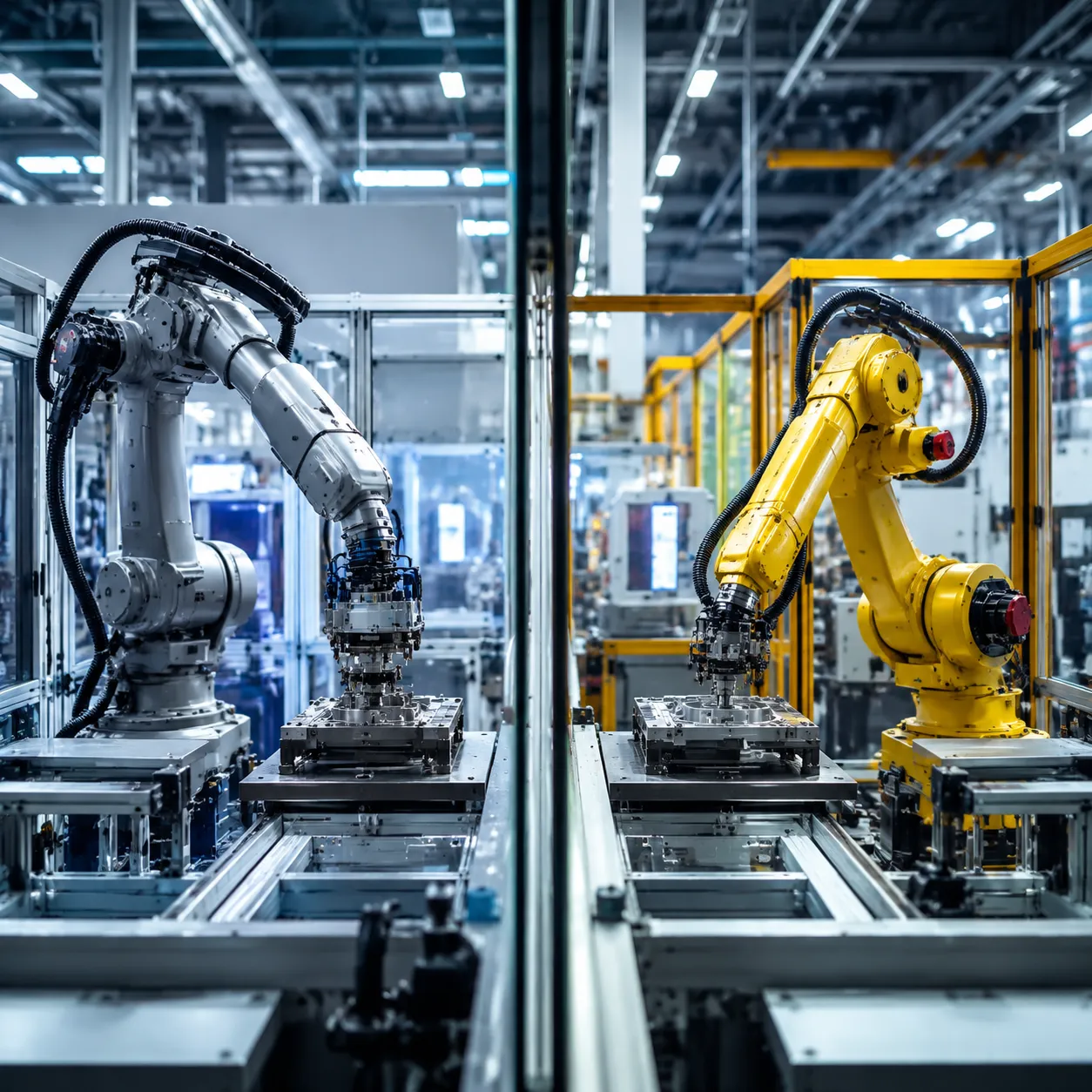
Core Architecture and CNC System Lineup
FANUC’s ecosystem has long been favored for its legacy stability and widespread adoption in manufacturing. The 0i-F and 30i-B series are prime examples, offering reliable performance for high-volume, repetitive machining tasks. Their hardware is known for durability, making them a go-to choice for shops prioritizing proven technology and minimal downtime. For more on FANUC’s servo systems and troubleshooting, visit Fanuc servo amplifier modules.
In contrast, Siemens’ ecosystem centers around the SINUMERIK platform—specifically, the SINUMERIK ONE and 840D sl. These systems are designed to be modular, open, and highly adaptable, emphasizing software-driven control. This flexibility allows for easier upgrades and customization, aligning well with Industry 4.0 initiatives. Siemens’ controls are built to handle complex multi-axis machining and high-precision applications, making them ideal for industries like aerospace and medical tooling. Their architecture also supports robust operation in environments with fluctuating power supplies, thanks to resilient hardware and advanced power management features.
Power grid considerations are critical; Siemens’ CNC systems are engineered to withstand factory power stability issues and environmental factors, ensuring continuous operation. This resilience reduces costly downtime and maintenance, especially in less controlled environments. Their hardware’s ability to handle power fluctuations is a key advantage for shops looking to future-proof their automation investments.
Comparing Siemens and Fanuc: Programming Methods
On the shop floor, I care about one thing first: how fast an operator can get from setup to parts without mistakes. That is where the CNC user interface and programming method really matter.
Operator experience
- FANUC usually leans on a traditional, key-based control style.
- Siemens feels more modern, with intuitive touchscreens and a cleaner workflow.
- For teams used to older machines, FANUC can feel familiar.
- For shops that want faster changeovers and easier training, Siemens often feels smoother.
G-code and macro flexibility
- FANUC is strong in standard ISO G-code programming and is widely known across the industry.
- Siemens gives more room for macro language versatility and advanced program structure.
- That extra flexibility helps when parts change often or when multi-axis machining gets more complex.
- In real use, this can support better high-speed surface finishing and more efficient complex mold and die machining.
Conversational programming
- Siemens ShopMill and ShopTurn are built for quicker setups.
- They help simplify conversational programming for common milling and turning jobs.
- This can cut down on setup time and reduce dependency on highly specialized programmers.
- For mixed-skill teams, that is a real advantage.
Quick comparison
| Area | FANUC | Siemens |
|---|---|---|
| Learning curve | Familiar for many operators | Easier for new users on modern screens |
| Setup time | Efficient for standard jobs | Often faster for guided setup and quick edits |
| Ease of use | Strong for experienced G-code users | Strong CNC user interface and touch-based workflow |
| Programming style | ISO G-code focused | G-code plus flexible macros and conversational tools |
| Best fit | Repetitive production, stable processes | Faster changeovers, complex jobs, mixed-skill teams |
For me, the main difference is simple: FANUC is proven and straightforward, while Siemens brings a more flexible, operator-friendly path for shops that want quicker setup and better programming flow.
Comparing Siemens and Fanuc on the Shop Floor
Precision, speed, and complexity
When I look at real shop floor output, FANUC is a strong fit for high-volume, repetitive production. It performs well in fixed 3-axis machining where cycle time, stability, and repeatability matter most.
Siemens has the edge when the job gets more complex. In multi-axis machining, advanced kinematics, and complex mold and die machining, Siemens SINUMERIK 840D and SINUMERIK ONE give more control over tool paths, surface quality, and machine geometry. That helps in high-speed surface finishing and tight-tolerance work.
| Area | FANUC | Siemens |
|---|---|---|
| Best fit | Repetitive, high-speed 3-axis work | Multi-axis machining and complex parts |
| Motion control | Fast and dependable | Strong path planning and dynamic speed adjustments |
| Surface quality | Good for standard production | Better for high-end finishing and detailed contours |
| Diagnostics | Solid, familiar tools | Deeper machine insight and fault tracing |
- FANUC is usually the safer pick for steady output and shorter setup on repeat jobs.
- Siemens is better when I need more flexibility, faster changes in geometry, and stronger handling of complex motion.
- On the control side, Siemens also fits well with factory automation scalability and cleaner plant integration; that is where hardware reliability matters, including systems like a Siemens SIMATIC S7-300 CPU 314 standard controller.
- For shops that run mixed work, Siemens often gives more room to grow without changing the full control strategy.
Siemens and Fanuc: Hidden Costs
When I compare a CNC control system, I do not just look at the sticker price. The real cost shows up in options, software, setup time, and later upgrades. That is where Total cost of ownership (TCO) matters most.
| Item | Siemens | FANUC |
|---|---|---|
| Standard features | More cycles, graphics, and open tools included | Core package is solid, but many extras cost more |
| Programming support | Strong built-in cycle support and easier setup tools | Manual Guide i and other helpers may require paid options |
| Advanced motion | Broad support for complex paths and multi-axis work | Specialized interpolations often add license cost |
| Upgrade path | More flexible for long-term expansion | Stable, but upgrades can stack up over time |
What Drives TCO
- Siemens usually gives more out of the box, which can cut setup time and reduce add-on spending.
- FANUC can be very reliable, but I often see extra charges for features that shops assume are standard.
- License fees, software options, and motion add-ons can change the budget fast.
- For shops planning growth, open architecture and upgradeability can matter as much as the base price.
Bottom Line
For a CNC control system comparison, I look at the full package: software, options, and future flexibility. Siemens often fits better when I want lower hidden costs, stronger standard features, and more room to scale without rebuilding the whole control strategy.
Industry 4.0 integration and digital twin capabilities are transforming how manufacturers optimize their shop floors. Siemens leads with its advanced digitalization platform, offering a powerful digital twin for simulation, error reduction, and process optimization. This virtual model allows operators to test and refine machining processes before real-world implementation, saving time and reducing costly mistakes. Siemens’ open architecture and software-driven controls seamlessly connect to factory networks through tools like TIA Portal and MindSphere, enabling real-time data exchange and smarter decision-making. These solutions facilitate predictive maintenance, quality control, and overall efficiency improvements. In contrast, FANUC’s IoT offerings focus on monitoring, data collection, and legacy system upgrades, providing essential digital integration but often requiring additional licensing or third-party tools. For manufacturers seeking a future-proof, scalable automation system, Siemens’ comprehensive digital twin and Industry 4.0 capabilities offer a clear edge in digital transformation and factory connectivity.
Application-Specific Insights: Which Brand Fits Your Sector?
In a real CNC control system comparison, I look at the production mix first, not the brand name. The right choice usually comes down to cycle speed, part complexity, and how much factory automation scalability you need on the floor.
- Automotive and consumer electronics: For high-volume, repeatable work, FANUC is often the safer fit. Its fast cycle times, steady G-code programming, and widely used controls like the FANUC 31i-A controller support tight throughput targets and simple day-to-day operation.
- Aerospace, medical, and high-end tooling: Siemens has the edge when the job calls for multi-axis machining, complex mold and die machining, and high-speed surface finishing. I prefer Siemens here because the CNC user interface, kinematics handling, and Industry 4.0 digital twin tools make setup and verification cleaner for tighter tolerances.
- Hybrid environments: If your shop runs mixed control systems, Siemens usually fits better for integration work. Its TIA Portal integration and open architecture help connect CNC, PLC, and plant data more smoothly, which matters when you are balancing TCO and long-term upgrade paths.
Bottom line: I match FANUC to volume and uptime, and Siemens to flexibility, complex geometry, and broader digital readiness.
Comparing Siemens and Fanuc: Final Decision
When I look at a CNC control system comparison, I focus on three things: performance, cost, and digital readiness. FANUC is a strong fit for repeat jobs, fast cycle times, and simple G-code programming. Siemens stands out when the shop needs multi-axis machining, a cleaner CNC user interface, and room to grow into Industry 4.0 digital twin workflows.
| Decision point | FANUC fit | Siemens fit |
|---|---|---|
| Production style | High-volume, repetitive work | Complex parts, mixed jobs, and changing setups |
| Cost focus | Lower entry cost on many standard builds | Better feature depth and stronger long-term TCO |
| Programming | Familiar G-code programming | More flexible conversational programming and open options |
| Digital readiness | Good monitoring and upgrades | Strong TIA Portal integration and digital twin support |
| Scale | Stable for proven lines | Better factory automation scalability |
Quick Check
- Choose FANUC if I need proven speed, simple operation, and automation hardware reliability for steady production.
- Choose Siemens if I need high-speed surface finishing, complex mold and die machining, and stronger software-driven control.
- Choose Siemens if future expansion matters, especially for connected lines, diagnostics, and easier upgrades.
- Choose a platform that matches the real workload, not just the lowest initial price; that is where total cost of ownership (TCO) stays under control.
For shops that want a more future-proof control stack, I favor Siemens automation hardware and software together, including proven options like the Siemens SIMATIC S7-300 CPU 314IFM compact controller for reliable plant integration.
Bottom Line
- Best for speed and repetition: FANUC
- Best for flexibility and digital growth: Siemens
- Best long-term strategy: match the control to the part mix, operator skill, and upgrade path