

If you’re searching for a drive replacement guide for your industrial systems, understanding the key differences between ABB ACS550-01-087A-4 and ACS580-01-088A-4 is essential. Whether you’re upgrading for better performance, enhanced energy efficiency, or outgrowing your current setup, knowing how these drives compare can make all the difference. This guide cuts through the technical jargon to deliver clear insights, practical steps, and expert advice, so you can confidently transition from the outdated to the cutting-edge. Ready to optimize your automation system? Let’s dive in.
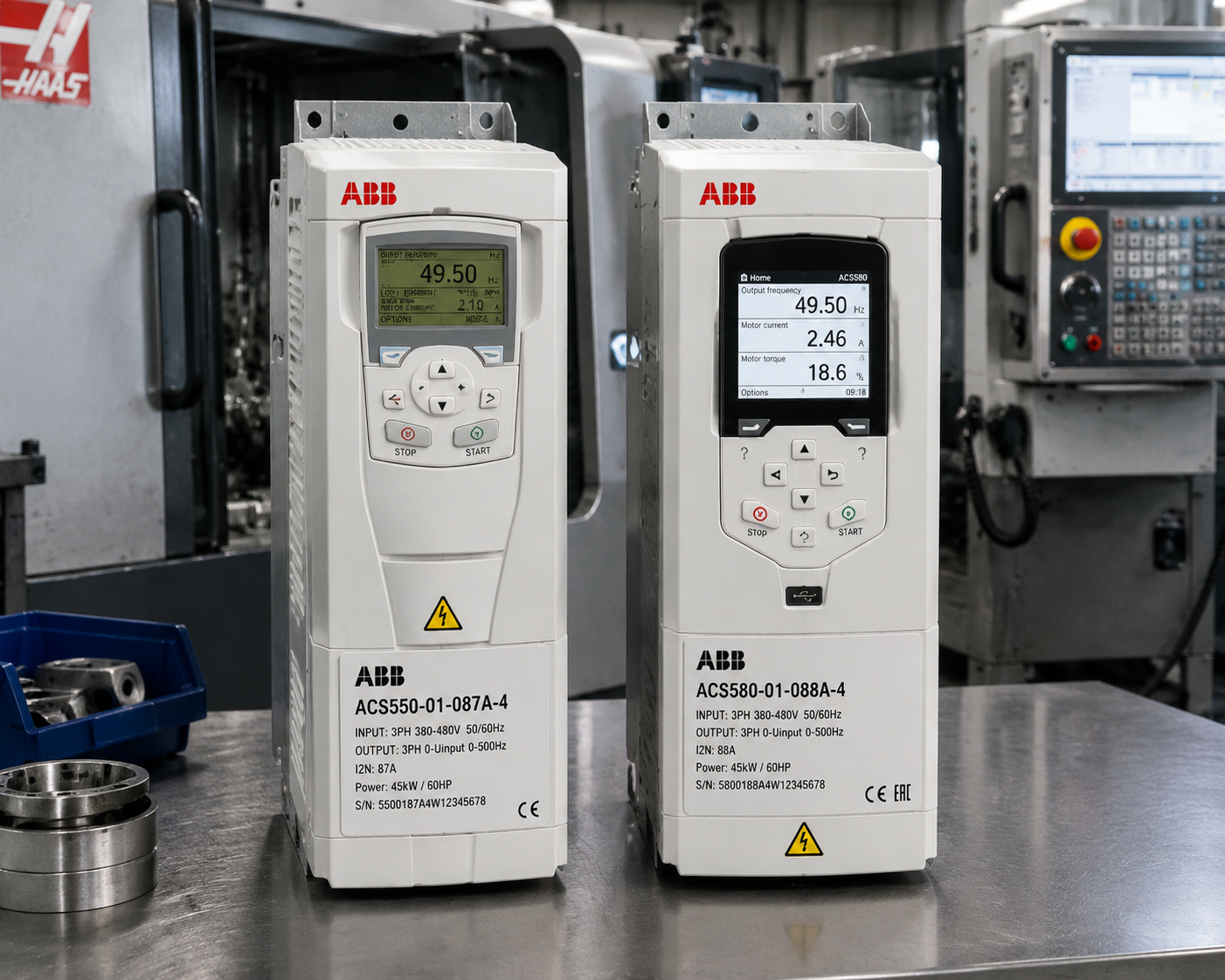
ABB ACS550-01-087A-4 vs ACS580-01-088A-4 Comparison
Thinking about replacing your old drive? Wondering how the ABB ACS550-01-087A-4 stacks up against the newer ACS580-01-088A-4? Let’s break it down — what are the main differences and benefits for your setup?
ABB ACS550-01-087A-4 Overview
The ABB ACS550-01-087A-4 is a reliable, proven variable frequency drive (VFD) for industrial applications. It’s known for:
- Solid performance in controlling pumps, fans, and conveyors
- Good basic features for standard automation needs
- Widely used in legacy setups
ABB ACS580-01-088A-4 Overview
The ACS580-01-088A-4 is ABB’s latest generation drive designed for smarter, more energy-efficient operation. It offers:
- Advanced diagnostics for easy troubleshooting
- Better integration with modern automation systems
- Enhanced energy savings and user-friendly setup
Key Specs and Ratings
| Feature | ACS550-01-087A-4 | ACS580-01-088A-4 |
|---|---|---|
| Power Range | 0.75 to 15 HP (0.55 to 11 kW) | 0.5 to 22 HP (0.37 to 15 kW) |
| Voltage | 200-240 VAC (single-phase or three-phase) | 200-240 VAC (single-phase or three-phase) |
| Current | Varies by model, approx. 4 to 60 A | Slightly more efficient, same range |
Power, Voltage, and Current
- Both drives operate on single-phase or three-phase power in the typical US range.
- ACS580 offers slightly better energy efficiency and load handling.
- Current ratings are similar, but the newer model is optimized for improved performance.
Enclosure and Mounting
- Both models are panel-mount, designed for easy integration.
- ACS580 features enhanced design for cooling and easier wiring — ideal for tight spaces.
- Check dimensions before swapping — mechanical fit is crucial.
Control Modes and Built-in Functions
- ACS550: Supports basic control modes like V/f, volts/hertz, and open-loop vector.
- ACS580: Adds advanced control options, including sensorless vector and integrated PLC features.
- Both are suitable for pump and fan applications, but ACS580 has more modern control features for complex setups.
Application Fit for Pumps and Fans
- Both drives are well suited for pumps and fans.
- ACS580 provides better energy management and fault diagnostics, perfect for critical or energy-saving applications.
- Need better reliability? The ACS580 is the smarter choice.
In , while the ABB ACS550-01-087A-4 has served well, the ACS580-01-088A-4 offers a modern upgrade with improved efficiency, diagnostics, and control capabilities. Next, we’ll dive deeper into the specific differences between these drives!
ACS550 vs ACS580 Differences
When considering the ABB ACS550-01-087A-4 vs ACS580-01-088A-4, it’s clear they’re designed for different needs, especially in performance and features.
Performance and Efficiency
The ACS580 offers better energy efficiency thanks to advanced power electronics and optimized motor control. It also provides more precise speed regulation and smoother operations. For industries like pumps and fans, this means reduced energy costs and more reliable operation. In contrast, the ACS550 is a solid workhorse with decent efficiency, but it’s more suited for basic applications where high performance isn’t critical.
Diagnostics and Fault Handling
The ACS580 has more advanced diagnostics. It detects faults earlier, helps identify issues quickly, and provides detailed fault logs. This makes troubleshooting faster and reduces downtime. The ACS550 offers basic fault alarms and simple fault history, but it might not catch problems as early. For critical systems, the diagnostic improvements with ACS580 are a big plus.
Communication and Connectivity
Both drives support common industrial protocols, but ACS580 has more modern connectivity options. It includes built-in Ethernet with support for protocols like EtherNet/IP and Modbus TCP, making integration into Industry 4.0 setups easier. The ACS550 might require additional modules for similar connectivity. So, if you’re upgrading for future-proofing and smarter automation, ACS580 is the smarter choice.
Programming and Parameter Setup
The ACS580 features more user-friendly programming with improved software tools and easier parameter migration. It also supports advanced control modes and custom logic that aren’t available on the ACS550. For those who need flexible control and straightforward setup, ACS580 simplifies this process. However, migrating parameters requires understanding the new control logic, which might involve a learning curve.
Software and Compatibility Changes
Switching to the ACS580 means embracing new software platforms—like ABB Drive Composer or Automation Studio—for configuration and maintenance. These tools are more modern but may require some training. Also, some legacy parameters on the ACS550 may not have direct equivalents on the ACS580, which can impact your upgrade plan.
What Changes Matter in Replacement Planning
- Electrical compatibility: Ensure wiring and power ratings match.
- Mechanical fit: Check mounting points and size.
- Parameter migration: Reprogram control logic.
- Software updates: Learn new setup procedures.
- For most users upgrading from the ACS550, a slight adjustment in wiring and configuration will be needed due to the internal controls and communication updates.
If you’re exploring a drive replacement for better performance and efficiency, upgrading to the ABB ACS580 makes sense. It’s designed to meet future industrial needs with advanced diagnostics, connectivity, and control features. However, careful planning for wiring compatibility and parameter migration is essential for a seamless switch. Need to verify mechanical fit or electrical specs? Check out ABB drive compatibility details to plan your upgrade better.
Is ACS580 a Replacement for ACS550?
Many customers ask if the ACS580-01-088A-4 can directly replace the older ACS550-01-087A-4. The short answer is yes, in many cases, but there are some important steps and checks you need to do first. The ACS580 is designed to be compatible with many legacy drives like the ACS550, but it’s not always a perfect 1:1 swap without some adjustments.
Direct replacement questions
Before you plan to swap out the drives, ask:
- Does the physical size and mounting match?
- Are the electrical ratings compatible?
- Can the wiring terminals handle the existing connections?
- Will the parameter settings transfer smoothly?
Mechanical fit check
First, compare the mounting dimensions. The ACS580-01-088A-4 has a similar footprint but double-check the mounting holes and overall size. You might need an adapter or new mounting brackets if needed. Make sure it fits snugly and doesn’t require major modifications.
Electrical compatibility check
Next, verify voltage and current ratings. The ACS580 generally supports a broad range but confirm it matches or exceeds your existing motor load and power supply. Check the motor nameplate data and compare it with the drive specs, especially for applications like pumps or fans.
Wiring and terminal differences
Wiring can be tricky. The terminal blocks on the ACS580 might differ from the ACS550. Make sure your existing wiring can connect securely, or plan for new wiring. The ACS580 offers improved terminal blocks for easier wiring and better reliability. Review the wiring diagrams in the user manuals to identify any differences or upgrades.
Parameter migration and control logic
Transferring control settings or parameters isn’t always straightforward. The ACS580 offers new features and different parameter layouts. It’s wise to export your current drive parameters from the ACS550 and carefully adjust them for the ACS580. Some logic, like control modes or fault handling, may need reprogramming.
When a simple swap is not enough
If your application is complex, involves legacy control logic, or custom wiring, a simple replacement might not suffice. You could need to reprogram or redesign part of your control system, especially if the drive interfaces or communication protocols have changed. Hiring a professional for the upgrade can save you time and avoid costly mistakes.
In short, while the ACS580 can often serve as a drop-in replacement for the ACS550, a thorough check of mechanical fit, electrical compatibility, wiring, and control settings is essential for a smooth upgrade.
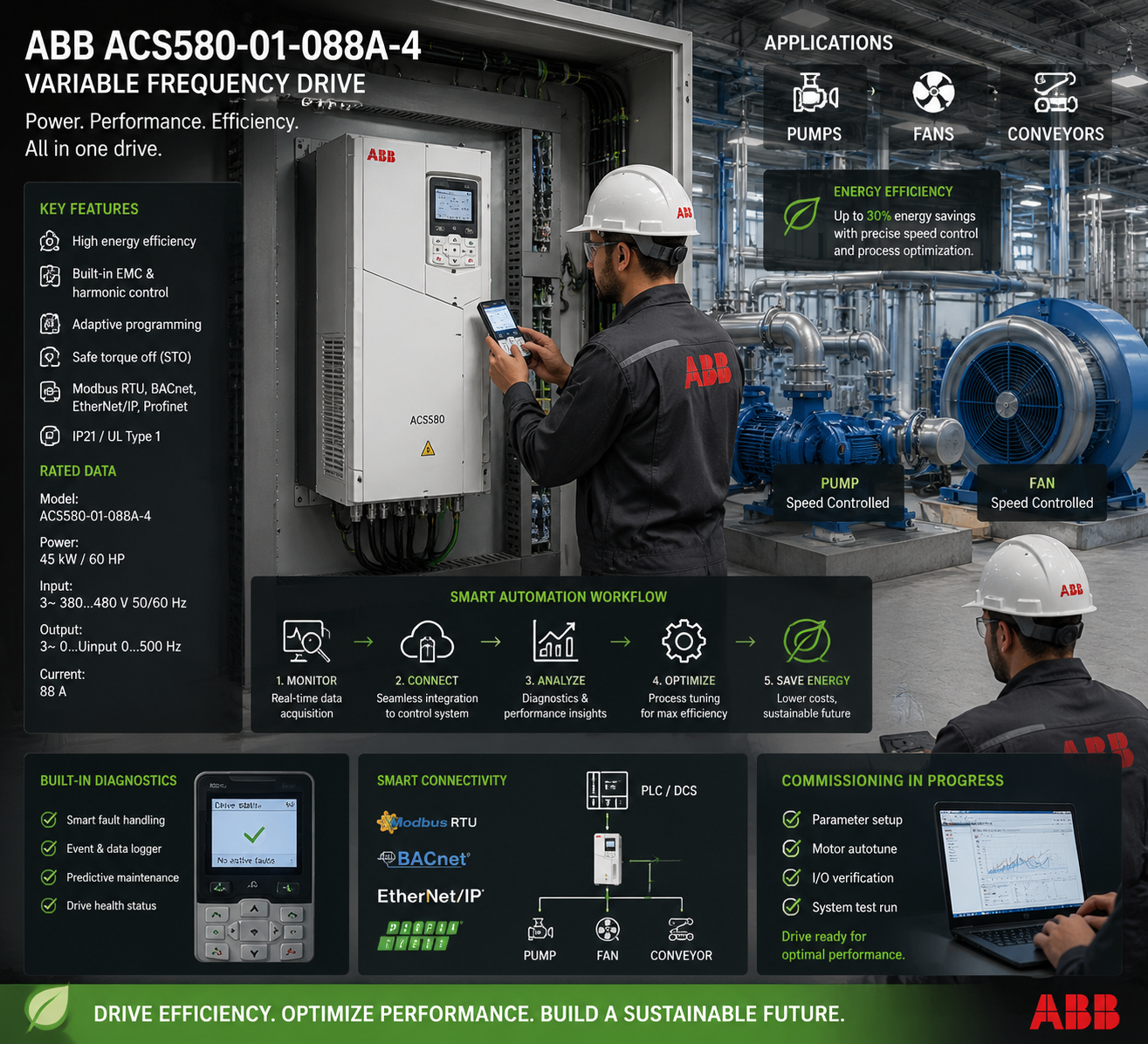
Drive Replacement Guide
Pre-replacement safety steps
Before starting the replacement, always ensure the power supply is fully disconnected to prevent electrical shocks. Wear proper PPE like insulated gloves and safety glasses. Confirm that the drive has cooled down after operation, as drives can get hot during use. Also, verify that the equipment is properly locked out and tagged out following standard safety procedures.
Tools and materials needed
You’ll need a set of basic tools:
- Screwdrivers (Phillips and flat-head)
- Allen keys or wrenches
- Voltage tester
- Multimeter
- Wire strippers and crimpers
- Torque wrench
- Replacement ACS580 drive (matching specifications)
Additional materials include:
- New terminal blocks if needed
- Insulation tape or heat shrink tubing
- Appropriate wiring and connectors
- Drive parameter backup file
For detailed guidance on safe and effective drive replacement, check out industrial drive installation tips.
Backup of parameters and settings
Before disconnecting the old drive, back up all existing parameters and settings. This ensures a smooth transition and helps with configuration of the new ACS580 drive. Use the drive’s programming software to save the current setup, including control modes, ramp rates, fault settings, and communication parameters. This is especially important when replacing an ACS550 with an ACS580, as there are some differences in programming and control logic.
Disconnecting the ACS550
Start by powering down the system and verifying that the drive is completely de-energized using a reliable voltage tester. Disconnect the input power wiring, control wiring, and any communication cables connected to the ACS550. Carefully note the wiring layout or take photos to make reinstallation easier. Remove the mounting screws holding the old drive in place, ensuring the drive is supported securely.
Removing the old drive safely
Once loosened, gently slide out the ACS550 from its enclosure or mounting panel. Be cautious of sharp edges and stored energy in capacitors, which may still hold charge. Follow proper procedures to discharge any residual voltage. Avoid pulling on wires excessively to prevent damage to wiring or terminals. Proper removal sets the stage for the smoother installation of the ACS580.
Installing the ACS580
Position the new ACS580 drive in the same location as the old one, aligning mounting holes. Securely tighten the mounting screws to prevent vibration or movement during operation. Reconnect all wiring—power, control, I/O, and communication—following the earlier notes or photos. Make sure all connections are tight and grounded properly to meet safety standards and improve performance.
Mounting, wiring, and grounding
Proper grounding is crucial for safety and noise immunity. Use appropriate gauge copper wire, and ensure grounding connections are solid. When wiring, double-check polarity and terminal compatibility between the ACS580 and existing control systems. Proper wiring reduces troubleshooting time and enhances reliable operation. Once wired, inspect the installation to confirm everything matches the original setup, but with the updated drive.
Initial power-up and inspection
Power up the system cautiously, watching for any abnormal noises or overheating. Observe the drive’s display panel for fault codes or alerts. Confirm that the drive’s basic functions like start, stop, and speed control respond correctly. Perform a visual inspection for loose wires, proper grounding, and secure mounting. This initial check helps catch potential issues early, ensuring a smooth start-up process.
Replacing a drive like the ACS550 with the newer ACS580 requires careful planning and attention to safety. Following these steps helps reduce downtime and makes sure your machinery runs smoothly with the upgraded drive system.
Commissioning and Setup for ABB ACS580-01-088A-4 Drive Replacement
Once you’ve installed the new ACS580-01-088A-4 drive, proper commissioning is key to ensure smooth operation and longevity. Here’s a straightforward setup process that’s easy to follow.
Basic Drive Configuration
Start by configuring the drive for your application. This includes selecting the appropriate control mode (such as V/Hz or sensorless vector), setting the rated voltage, and adjusting parameters to match your motor and load. Many of these settings can be imported from your old drive or configured via the ACS580’s intuitive setup interface.
Motor Nameplate Data Entry
Accurately input your motor’s data—like voltage, current, frequency, and rated speed—using the motor nameplate. This step is essential to guarantee the drive delivers the right performance and protects your motor from overloads. Many drives, including the ACS580, support parameter transfer from previous drives, simplifying this process.
Control Source Setup
Decide whether your drive will take commands from a local or remote control source. This could be a remote PLC or a manual local controller. Proper setup of control inputs and outputs will ensure your system responds correctly during operation.
I/O and Signal Verification
Next, verify all input/output signals. Check that sensors, switches, and communication lines are wired properly and respond as expected. This step helps prevent faults once the drive is running and reduces downtime. You might also review the drive’s built-in diagnostics to confirm circuit integrity.
Speed Reference and Start/Stop Test
Set your speed reference—this can be a potentiometer, analog voltage, or digital input—and perform a start and stop test. Pay attention to motor rotation direction, ensuring it matches your process requirements. Adjust parameters if needed before moving on.
Run Test and Load Check
Finally, run the system with your actual load or a test load profile. Observe the drive’s response, check for overheating, noise, or unusual vibrations. Confirm the load remains within the drive’s rated parameters, and fine-tune settings for optimal efficiency. This step is vital for a trouble-free operation in the long run.
Following these steps ensures your ABB ACS580-01-088A-4 drive is correctly set up, ready to deliver efficient, reliable control for your pumps, fans, or other automation needs. Proper commissioning reduces troubleshooting later and maximizes your investment.
Common Problems During Replacement
Replacing an ACS550-01-087A-4 with an ACS580-01-088A-4 can be straightforward, but you might run into some typical issues. Here’s what to watch out for:
Wiring Mismatch Issues
One of the common problems is wiring mismatch. The terminal layouts and connections might differ slightly between the old ACS550 and the new ACS580 drives. This can cause confusion and errors during installation. To avoid wiring problems, always double-check the wiring diagrams and terminal descriptions specific to the ACS580-01-088A-4. Properly labeling and confirming connections before powering up helps prevent short circuits or damage.
Parameter Transfer Issues
Transferring old drive parameters to the new ACS580 isn’t always seamless. Some control logic or specific settings from the ACS550 might not be compatible directly. It’s recommended to use the drive’s conversion tools or software to migrate parameters effectively. Consulting the ABB drive technical support can also help smooth out these issues, especially for complex control schemes.
Alarm and Fault Codes
The replacement drive could generate different fault or alarm codes due to improved diagnostics in the ACS580. These aren’t necessarily bad but require interpretation. Common faults like overcurrent or voltage alarms may indicate wiring or parameter issues. Always reference the ACS580 fault troubleshooting guide to diagnose and clear alarms promptly.
Communication Errors
If your system communicates through Modbus, ProfiNet, or Ethernet, communication errors may occur. These are often due to differences in communication protocols or settings. Confirm compatibility and ensure the correct protocol settings are programmed during setup. The newer ACS580 supports advanced communication features that might require firmware updates or configuration adjustments.
Overload or Underload Issues
Incorrect motor data entry during setup or wiring errors can cause the drive to trip on overload or underload. Verify motor nameplate data and ensure the drive’s settings match the motor’s specifications to keep the motor running smoothly.
How to Reduce Downtime
To minimize downtime during replacement, here are key steps:
- Prepare and document all existing parameters before starting.
- Use proper tools for safe disconnection and installation.
- Double-check wiring and parameter compatibility.
- Test the drive with no load before full operation.
- Have spare parts and troubleshooting guides ready to speed up repairs or adjustments.
Handling these common problems with careful planning and verification helps ensure a smooth transition from the ABB ACS550 to the ACS580 drive, maximizing uptime and efficiency.
Troubleshooting and Fixes for ABB ACS580 Drive Replacement
No-start conditions
If the drive won’t start, check the wiring connections and power supply first. Ensure that the input voltage matches the ACS580-01-088A-4 specifications. Sometimes, incorrect wiring or a blown fuse can cause a no-start situation. Also, verify that the control signals are properly set up and that there are no faults stored in the drive’s memory. For more insights on wiring and control setup, see our drive installation tips.
Wrong rotation direction
If the motor is spinning the wrong way after the replacement, double-check the wiring of the motor leads and the control parameters. Many drives allow you to swap two motor leads to change rotation without reprogramming. Specific parameter adjustments related to motor rotation might need updating. Reversing the direction is common during upgrades, so ensure that the wiring and parameters align with your application needs.
Overvoltage and undervoltage alarms
These alarms often occur if the supply voltage fluctuates outside the drive’s acceptable range. Check your incoming power supply for stability. If the voltage remains inconsistent, consider installing a power conditioner or stabilizer. Also, ensure that the drive’s voltage setting matches your local power grid to prevent false alarms. Do a quick check on wiring connections and grounding as faulty grounding can cause voltage issues.
Overcurrent trips
Overcurrent trips happen when the motor tries to draw more current than the drive’s rated capacity. This could be an indication of mechanical issues, such as a jam or overload, or incorrect parameter settings. Verify the motor’s nameplate data matches with the drive setup, and ensure that the drive’s current limit settings are appropriate for your load. Regular maintenance and proper wiring help reduce these faults. For detailed troubleshooting, consult the ACS580 programming guide.
Cooling and ventilation problems
Overheating is common if cooling fans or ventilation gaps are blocked or if ambient temperatures are too high. Make sure the drive’s cooling fans are operating correctly, and clean any dust or debris from vents. Adequate ventilation ensures your ACS580 runs efficiently without tripping due to heat. Proper installation and regular checks of cooling fans and filters are essential for long-term operation.
When to recheck the installation
Revisit your installation setup if you experience repeated faults, alarms, or unexpected shutdowns. Confirm wiring correctness, grounding integrity, and supply stability. Also, ensure that the drive is mounted properly according to the manufacturer’s guidelines. Upgrading your system with an ACS580 drive offers improved diagnostics, so utilize its fault codes and logs to troubleshoot more effectively.
If it’s time to troubleshoot or replace, always follow safety procedures, power down the system, and verify all connections before proceeding. Proper troubleshooting can prevent downtime and extend the lifespan of your upgraded automation system.
Upgrade Benefits and Maintenance
Why upgrade to ACS580?
Switching from the ABB ACS550-01-087A-4 to the ACS580-01-088A-4 offers many advantages. The newer drive enhances energy efficiency, improves diagnostic tools, and provides long-term support. It’s a smarter choice for modern industrial needs, especially if you’re looking to extend equipment life and reduce downtime.
Energy savings and better diagnostics
The ACS580 drive is designed to save more energy thanks to advanced control algorithms and improved motor efficiency. It also features superior diagnostics that help you catch issues early—reducing unexpected failures. This minimizes costly repairs and keeps your system running smoothly.
Long-term support and lifecycle value
The ACS580 provides better support and firmware updates, ensuring your drive stays current with technology. Its longer lifespan and easy upgrade path make it a cost-effective investment. Regular firmware updates and remote diagnostics extend the drive’s lifecycle, saving you time and money over years.
Routine maintenance after replacement
Post-installation, routine checks are critical:
- Fan, filter, and terminal checks: Keep cooling systems clean to prevent overheating.
- Firmware and software updates: Regular updates ensure compatibility with new features and bug fixes.
These small steps help maximize the drive’s lifespan and maintain optimal performance.
table
| Benefit | Details |
|---|---|
| Energy savings | Advanced algorithms reduce power use |
| Better diagnostics | Early fault detection and remote troubleshooting |
| Long-term support | Firmware updates and lifecycle extension |
| Easy maintenance | Routine fan, filter, and terminal inspections |
Implementing these maintenance tips after upgrading to the ACS580 keeps your equipment reliable and running at top efficiency. Want to explore more about drive maintenance? Check out industrial drive installation tips for a smoother upgrade process.
FAQ on ACS550 to ACS580 Replacement
Is the ACS580-01-088A-4 a direct substitute for the ACS550-01-087A-4?
Not exactly. While the ACS580 is designed as a modern replacement and offers many improvements, it’s important to check mechanical fit, electrical compatibility, and control wiring. Some parameters and configurations will need adjustment. It’s not always a simple plug-and-play, so proper planning is key.
What compatibility checks are required?
You’ll want to verify:
- Mechanical mounting dimensions
- Power supply ratings and motor parameters
- Wiring terminals and control signal compatibility
- Communication protocols (Modbus, Ethernet, etc.)
- Parameter functions and control logic differences
Quickly, looking into ABB drive compatibility can help ease this process.
Can old parameters and settings be reused?
Partially. Many basic parameters like motor data can often be transferred, but the newer ACS580 includes new features and a different parameter structure. It’s recommended to carefully review and update settings to match the new drive’s capabilities. Always back up your current parameters before starting the swap.
How long does a typical replacement take?
For experienced technicians, the physical swap — disconnecting the old drive, wiring the new one, and initial setup — usually takes a few hours. Proper planning, backup of settings, and calibration can reduce downtime significantly.
What support is needed during commissioning?
You’ll need:
- Proper tools for wiring and grounding
- Basic electrical and control system knowledge
- Access to the latest drive firmware and software tools for configuration
- Technical support from ABB or a qualified electrician if unexpected issues surface
This support ensures a smooth transition and minimizes operational disruption.
For more detailed steps, consult an ABB VFD programming guide.